To succeed as a med spa owner in 2026, you must pivot from thinking like a clinician focused on procedures to a business analyst focused on rigorous financial discipline. Using these data-driven benchmarks and “guardrail” metrics will help you stop treating your practice like a high-end hobby and start managing it like a profitable retail machine.
Most med spa owners treat their finances like a secondary task, only to realize by Q4 that their high procedure volume hasn’t translated into the profit margins they expected. You are likely burning cash on inefficient overhead or inconsistent marketing spend because you lack a clear financial roadmap.
With over two decades helping med spa owners navigate these exact hurdles, I’ve seen this cycle repeat too often. In this guide, we’re moving beyond guesswork by providing the precise framework required to scale your practice sustainably in 2026.
Book a free strategy call with Kelly and let’s turn your clinic into a predictable, high-performing revenue machine.
To transition from clinician to CEO, you must treat your spa as a data-driven retail operation rather than a boutique practice. Achieving sustainability requires strict adherence to industry-standard “Golden Ratios” that protect your margins against rising overhead costs.
If your expenses deviate from these guardrails, your practice is likely bleeding revenue through inefficiency. Audit your last six months of P&L statements against these essential benchmarks:
Pro tip: Always isolate your owner compensation from standard staff payroll. When you lump your take-home pay into operational payroll, you create “hidden” labor costs that mask your true EBITDA, making it impossible to see if your spa could survive without your direct clinical labor.
Vanity metrics—like Instagram followers or “likes”—are the greatest distraction for a growing med spa. To scale, you must focus exclusively on revenue-driving KPIs that provide a clear pulse on your business health.
Implement a weekly dashboard to track these three critical levers. If you aren’t reviewing these numbers every Monday, you aren’t managing a business; you are simply managing appointments.
Book a Call if you feel like you’re drowning in data but starving for insights.
Most owners approach revenue by hoping for a good month; growth-focused owners engineer their success by working backward from a gross revenue profit target. Calculate exactly how many touches are required within each service category to hit your numbers.
Use this simple “Capacity Gap” analysis to define your scaling strategy:
Pro tip: When calculating the break-even for new laser or device investments, use this formula: (Total Cost of Equipment + Consumable Cost per Treatment) / Price per Treatment = Break-even Number. If your current schedule cannot support the addition of those procedures, the equipment will become a liability rather than an asset.
Stop viewing marketing as a generic “cost of doing business” and start viewing it through the lens of Customer Acquisition Cost (CAC). Every dollar spent must be tied to a specific traffic source that allows you to calculate the Lifetime Value (LTV) of that patient.
For a mid-sized spa with a $7,000 monthly marketing budget, allocate resources to balance immediate lead capture with long-term brand authority:
Membership programs are the secret currency of high-valuation medical spas. By converting one-time patients into recurring members, you generate predictable, automated cash flow that decouples your income from your daily clinical productivity.
Consider these high-impact benefits of moving to a recurring revenue model:
Scaling from a busy clinical practice to a sophisticated enterprise requires moving away from gut-feeling decisions. With over two decades helping owners thrive, I know that implementing a standardized financial architecture is the only way to identify bottlenecks before they impact your profits.
The difference between a stressed owner and a successful entrepreneur is the ability to interpret data and identify untapped scale. Once the math is clear, you will see exactly where to cut, where to invest, and how to scale your service volume.
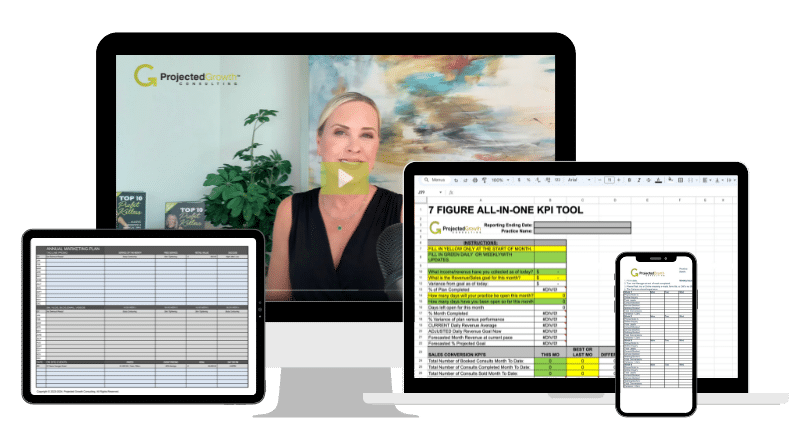
Bonus: Download our Comprehensive 2026 Budget Template to map out your quarterly financial projections today.
True scalability in the aesthetics industry isn’t found in luck or longer hours; it is built on the foundation of rigorous financial discipline and the transition from clinician to strategic CEO. By mastering your profit margins and prioritizing predictable, recurring revenue, you move your business from a state of reactive stress to one of institutional strength.
The numbers you track today will dictate the trajectory of your practice in 2026. Don’t let another quarter pass by guessing your way to growth.
Book a free strategy call with Kelly today and let’s start your transformation.