More leads will not fix a med spa with no path from inquiry to sale. The system must move each prospect toward a consultation, treatment plan, or membership.
A med spa funnel is a repeatable sales process that moves an inquiry through follow-up, consultation, and the sale of a treatment plan or membership. It replaces scattered calls, forms, and direct messages with clear stages, assigned ownership, and KPIs for each step. Online scheduling and consistent follow-up keep qualified prospects from disappearing between stages. A strong process also continues after the first sale and tracks whether patients return. One aesthetic-clinic study found that formal plan initiation was associated with a 2.5-fold higher chance of six-month retention. When acquisition, closing, and retention connect, your team can identify the revenue leak, improve the weak step, and build a more predictable pipeline.
Before comparing examples, answer the basic question: What is a med spa funnel? The definition separates a tracked sales process from random marketing activity. It also shows where to assign ownership and measure results, so improvements target a real revenue leak. The path begins with:
A med spa funnel is the trackable path from first inquiry to repeat care. It shows how a lead enters your practice, who responds, and what happens next. The path should cover lead capture, consultation booking, consultation, treatment plan acceptance, sale, and retention.
Think of the funnel as an operating system for growth, not a single ad campaign. Each stage needs an owner, a next action, and a KPI. This structure helps an owner see where interest becomes revenue and where potential patients drop out.
A useful funnel starts when someone fills out a form, calls the practice, or sends a message. The lead should then move through clear stages in your tracking system. An owner can review the same basic path each week:
Retention belongs inside the med spa funnel. It is not an afterthought. Research on aesthetic clinics links formal facial assessment and treatment planning with stronger patient retention. The study also used six-month return rates to measure retention.
A campaign creates attention. A funnel gives that attention a managed path. For example, a laser promotion may bring in form fills, calls, and direct messages. If nobody owns the response, those leads sit outside a working funnel.
The same rule applies when software sends an instant text. Automation can support the first touch, but it does not replace ownership. A staff member still needs a due date, a response standard, and a clear next step. Review your process for automated lead follow-up for med spas without losing that human handoff.
Owners do not need to inspect every message. They do need stage-level visibility. Track how many new leads reach each stage, how long follow-up takes, and why consultations fail to become sales. That view exposes process gaps before more ad spend hides them.
For example, a practice may generate steady inquiries but book few consultations. The issue may sit in response ownership, scripts, or missed follow-up. A stage-by-stage review makes common sales mistakes in med spas easier to spot and fix.
A med spa funnel should make the next action clear at every point. It should also give your team a repeatable process for moving an inquiry toward the right service. The goal is not to push every lead into a sale. The goal is to create a consistent path from first interest to a useful care plan.
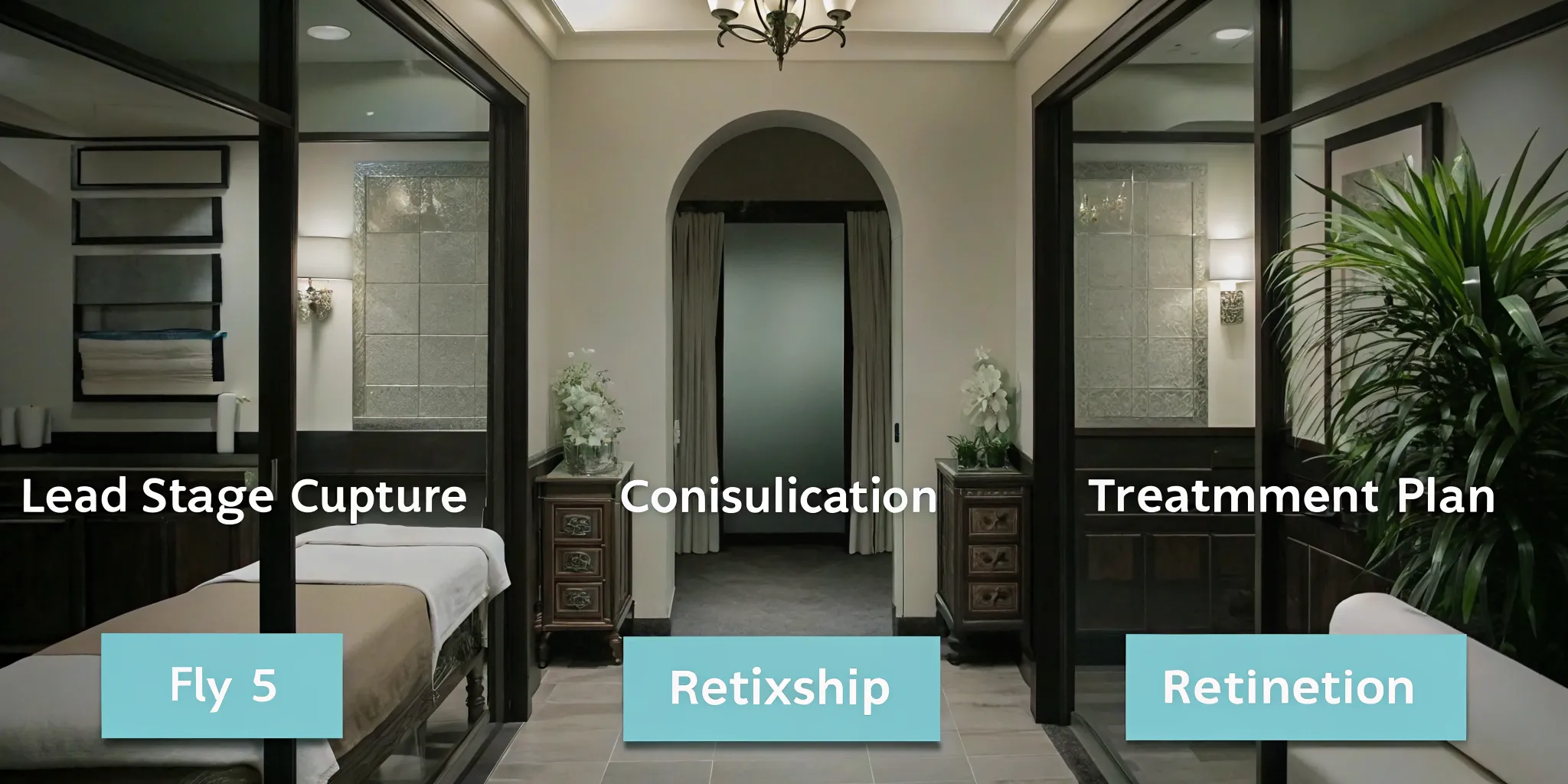
Use these five stages as the core workflow. Define one owner, one next action, and one KPI for each stage. That keeps leads from sitting in an inbox without a clear follow-up plan.
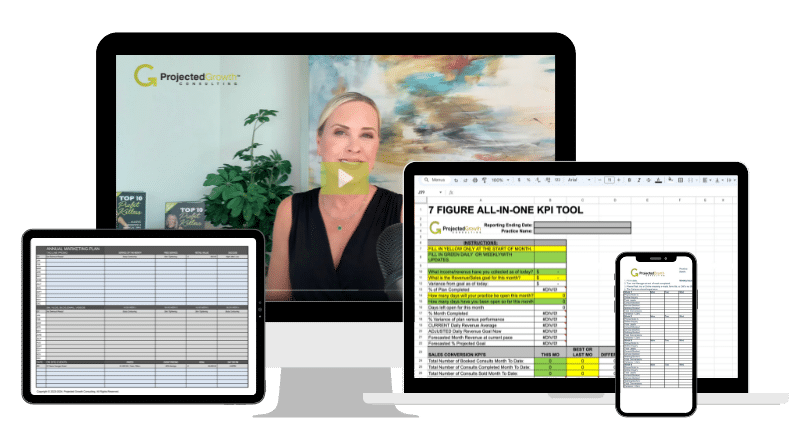
Track conversion rates between stages, not just total leads or booked revenue. A strong lead count can hide slow follow-up, weak qualification, or uneven consultations. Review response time, consultation booking rate, show rate, and close rate each week. These KPIs show where the workflow needs training or a tighter process.
The sale should lead into a care plan, not a one-time transaction. Use the CRM to record the recommended service, follow-up date, and next touchpoint. That gives your team a reliable way to support retention while keeping the funnel measurable.
A med spa funnel should match the revenue goal behind the campaign. An event promotion needs a short path to a booked conversation. A growing practice needs a nurture system with clear KPIs. A startup needs a guided path that builds trust before the first service launch.
Use an event-driven funnel when the practice has a defined promotion and a firm event date. The first offer can be an event planning guide, a consultation request, or an RSVP form. Each entry point should feed one follow-up queue so the team can track every response.
This path is narrow by design. Keep the handoff simple: capture interest, book the next step, and record the outcome. After the event, move interested clients into follow-up for treatment plans or future promotions.
A growth funnel works best when the goal is steady sales, not one campaign spike. Start with a useful tool, such as a KPI tracker or lead tracker. Then send a short nurture series that answers common objections and points to a consultation.
Centralize each inquiry and status change in the CRM. The team can use automated lead follow-up for med spas while staff still owns the personal handoff. Track where leads pause, which messages earn replies, and which consultations become treatment plans.
Do not stop the funnel at the first booking. A study of aesthetic clinics used six-month return rates to assess retention. It also found stronger retention after formal assessment and treatment planning began. That makes the consultation a business checkpoint, not just a calendar event. Review the patient retention study when setting post-consultation KPIs.
A startup funnel should reduce uncertainty before it asks for a large commitment. Start with an educational guide or planning resource. Follow with a business-plan consultation, then map the prospect to the right launch support. The goal is an informed next step, not pressure.
Build retention into the startup journey before opening day. Define the lead tracker, consultation process, and follow-up owner early. A clear med spa funnel gives a new team a repeatable workflow as inquiries begin to arrive.
A med spa funnel should promote the lowest-friction offer that matches the lead’s intent. A new visitor may want useful guidance before booking. A repeat patient or referral lead may be ready for a consultation. The first offer should create a clear next step, not force every lead into the same path.
Use a lead magnet for early research, then invite a clear reply or booking. Use a consultation when the lead already has a treatment goal. This keeps the first ask practical while leaving room for follow-up. It also helps your team track which offer starts each patient journey.
The right entry point depends on what the lead knows and what your team can support. A med spa funnel can use several offers without promoting all of them at once. Choose one primary path for each traffic source, then define the next action before launch.
| Offer path | Best intent fit | Practice-stage fit | Next action |
|---|---|---|---|
| Lead magnet. | Early research. | New or growing practice. | Nurture toward consultation. |
| Consultation. | Active treatment interest. | Any stage with booking capacity. | Assess needs and recommend care. |
| Event. | Interested leads who need a set date. | Growing practice with trained staff. | Book event follow-up. |
| Membership. | Returning patient interest. | Practice with repeat-care systems. | Explain recurring value. |
| Treatment plan. | Consultation-ready patient. | Practice with a clear care process. | Set the next treatment milestone. |
An early-stage practice often needs one simple path: lead magnet, follow-up, consultation, and plan. A growing practice can add an event path when the team can manage the extra steps. An established practice may add membership offers for returning patients. Review upselling and cross-selling strategies before adding those offers.
Treatment plans should not be treated as an afterthought. One medical aesthetics cohort study linked formal plan initiation with a 2.5-fold higher chance of six-month retention. The same study reported consistent retention gains across neuromodulator, filler, and biostimulator treatments.
Pick the first offer your team can deliver well. Then document the handoff, booking step, follow-up owner, and KPI. If response work is uneven, fix automated lead follow-up for med spas before adding another path. More offers do not solve a weak handoff.
A med spa funnel should be measured as one connected path, not as a set of isolated campaigns. Build a weekly dashboard that follows each inquiry from first response through membership conversion. Use the same definitions across the front desk, providers, and managers.
Start with response time, contact rate, and booking rate. Response time shows how long a new lead waits for the first reply. Contact rate is reached leads divided by total new leads. Booking rate is booked consultations divided by reached leads.
Keep each denominator clear, then compare results by lead source and team member. If response time grows, review ownership, alerts, and after-hours coverage. If contact rate slips, check whether the team uses a clear follow-up sequence. This guide to automated lead follow-up for med spas adds useful context.
Next, track show rate, consultation close rate, average sale, and membership conversion. Show rate is attended consultations divided by booked consultations. Consultation close rate is purchases divided by attended consultations. Average sale is collected sales revenue divided by completed purchases.
Membership conversion needs its own line on the dashboard. Define it as new memberships divided by eligible consultations, then keep that rule steady. If show rate falls, review reminders and booking friction. If close rate or average sale falls, audit discovery questions, treatment planning, and next-step clarity.
Do not treat every weak result as a marketing issue. A drop after the consultation points to sales process gaps, not lead volume alone. Review these common sales mistakes in med spas when the middle of the funnel stalls.
Review the dashboard each week and choose the first weak stage in the path. Fix that stage before adding more leads. Segment the view by source, location, provider, service, and first-time versus returning patient. This keeps a blended average from hiding the real problem.
Use retention as a longer-range check. A published medical aesthetics study measured six-month retention as a stand-in for patient satisfaction. It also analyzed records from clinics sharing one CRM database. That approach supports a consistent patient journey view, not a collection of separate spreadsheets. The retention study also gives practices a useful model for follow-up analysis.
Document the change, owner, and review date for each test. Examples include faster first-response routing, a revised reminder flow, or a clearer consultation script. Keep changes small enough to connect the action with the result.
A med spa funnel can look busy while revenue slips through gaps between each stage. The problem is often not lead volume. It is the lack of a clear handoff from inquiry to consultation, plan, and next offer. Audit the steps below before adding more campaigns.
A generic contact form gives the front desk little context for the first call. Ask for the lead’s main concern, treatment interest, preferred contact method, and booking window. Keep the form short, then route each inquiry to one owner in your CRM.
Next, define the follow-up path before a lead arrives. Use a prompt first reply, assign each task, and track the outcome. A missed call needs its own callback step. For more detail, review automated lead follow-up for med spas.
Not every inquiry needs the same script. Separate new leads by concern, readiness, budget range, and service fit. Give the front desk a short set of questions. Then record each answer in the same fields, not in scattered notes.
The consultation also needs a repeatable structure. Use a checklist for goals, assessment, treatment options, timing, objections, and a clear next action. An aesthetic-clinic study linked formal assessment and treatment planning with stronger retention. It also found a consistent pattern across several treatment types. The published retention study supports making the plan a standard step.
A booked treatment should not end the funnel. Decide what the team should offer after each service, based on the client’s plan. That may be a follow-up treatment, a related service, or a membership. Keep the recommendation tied to the client’s goals.
Build a simple offer map and train staff to use it at checkout and follow-up. Review accepted offers, declined offers, and return bookings by service each week. This makes upselling and cross-selling strategies part of the client journey instead of a last-minute pitch.
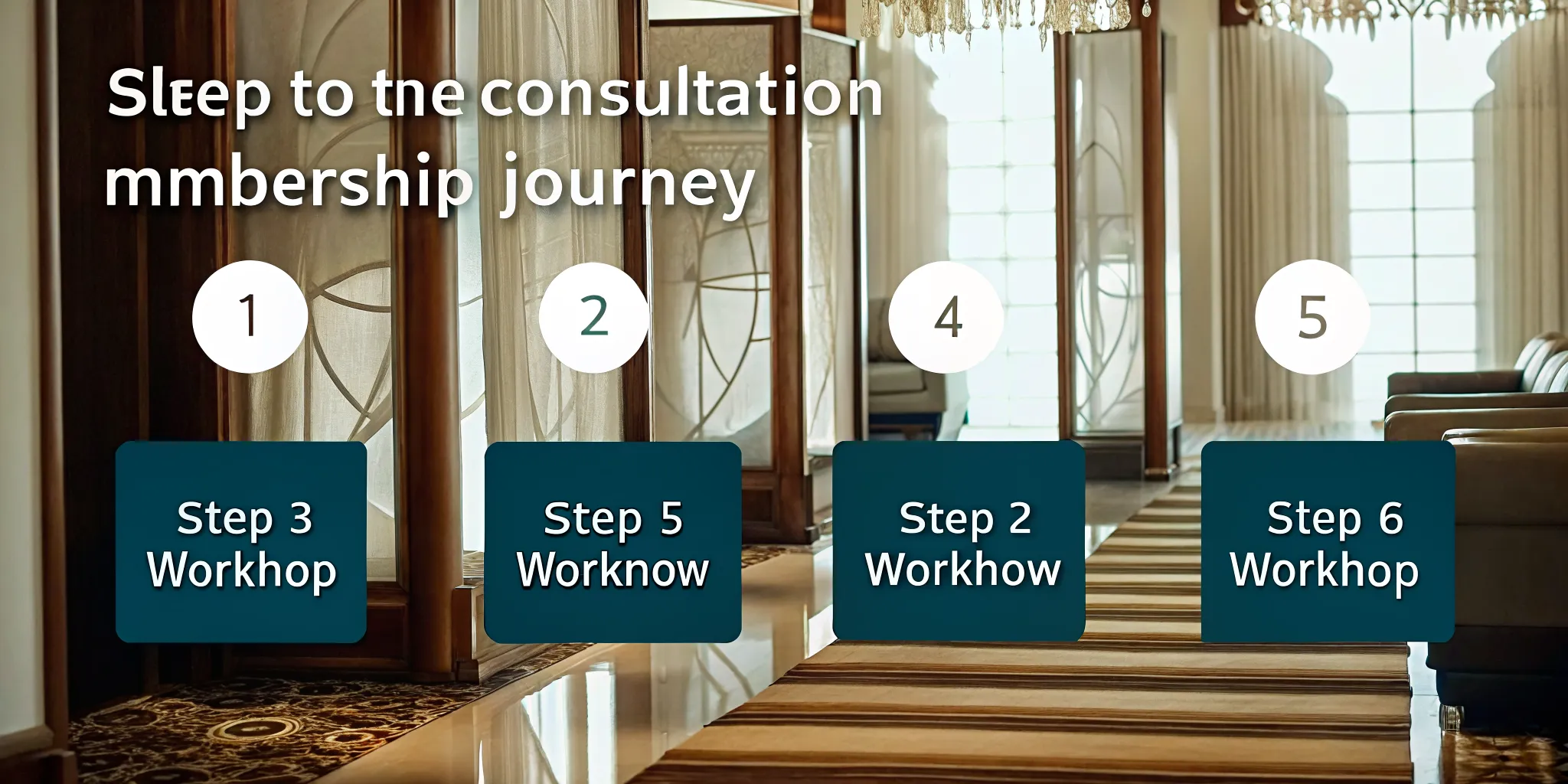
A med spa funnel becomes scalable when it runs as an owned operating system, not a loose marketing campaign. Give each stage one owner, one next action, and one measurable outcome. The goal is simple: every lead moves through the same clear process.
Map responsibility from first inquiry through consultation, treatment plan, booking, and retention. Assign a named role to each handoff. Set a response standard, a follow-up path, and an escalation step for leads that stall.
Scripts matter because they remove guesswork while leaving room for a natural conversation. Build scripts for first contact, consultation reminders, treatment-plan follow-up, and membership conversations. Review common sales mistakes in med spas when you decide what your team should say and avoid.
Your CRM should show where each lead sits, who owns the next step, and when action is due. Use stages that mirror the actual patient journey. Keep lead source, service interest, consultation status, and next contact date visible to the team.
Do not stop tracking after the first booking. A study of aesthetic clinics used records from clinics that shared a unified CRM database to study retention. That approach points to a wider lesson: track follow-up and return behavior in the same system.
Build workflow triggers for new inquiries, missed calls, booked consultations, no-shows, and follow-up tasks. Automation should support the team, not hide weak sales habits. Use automated lead follow-up for med spas as a support layer with clear human ownership.
Review the funnel as a team each week. Track lead volume, contact rate, consultation bookings, show rate, treatment-plan acceptance, and return visits. Look for the stage with the biggest leak, then test one change at a time.
Train against the same process you measure. Managers should review calls, coach scripts, and confirm that CRM notes are complete. When the team changes an offer or workflow, document the change. Compare results before expanding it across locations.
This turns testing into a repeatable discipline. The practice can improve one stage without rebuilding the full funnel. Over time, the med spa funnel becomes easier to manage, teach, and scale.
A practical med spa funnel moves through lead capture, qualification, consultation booking, treatment planning, the sale, and follow-up. After the first purchase, the team can discuss a suitable membership or longer treatment plan. Each stage should have an owner, a next action, and a KPI. That structure shows where inquiries stall before they become clients.
Start with one service, one ideal client, and one clear next step. Use a landing page or form to capture inquiries, then route them into online booking and staff follow-up. During the consultation, connect the client’s goals to a documented treatment plan. Research on medical aesthetic clinics found higher retention after structured treatment planning was introduced, according to this peer-reviewed study.
Lead generation fills the top of the funnel, but volume alone does not create sales. A useful campaign attracts people with a specific concern and directs them to a form, call, or booking page. The front desk should record the source, service interest, contact attempt, consultation status, and outcome. Those fields reveal which channels produce qualified consultations and treatment-plan sales.
Automation can confirm inquiries, send booking links, remind prospects about consultations, and trigger follow-up after missed appointments. A CRM can also place each lead in a pipeline stage and assign the next staff action. HighLevel’s medical spa playbook lists forms, surveys, online scheduling, calendars, sales pipelines, and workflow automation as related tools. Automation should support personal conversations, not replace them.
A funnel gives the team a repeatable path from inquiry to consultation and from consultation to a treatment plan or membership. Without defined stages, leads can receive inconsistent follow-up or disappear between channels. Tracking conversion rates by stage helps managers find the weak point. They can then improve the form, booking process, consultation process, offer, or follow-up sequence.
Every month without a clear funnel leaves more leads waiting, consultations inconsistent, and potential membership or treatment plan revenue on the table. Starting now gives your team time to tighten lead capture, follow-up, consultation steps, and KPI reviews before the next busy period arrives. A documented process makes it easier to see where prospects stall, assign next steps, and improve conversion points without losing momentum.
Ready to replace loose steps with a sales process your team can follow consistently? Book a call to build a more scalable med spa sales system with Projected Growth Consulting. Contact the consulting team now to choose your first priority and map the next steps for practical implementation.

Written by
Founder & CEO, Projected Growth Consulting
Kelly Smith is a med spa business consultant with 20+ years of industry experience and the founder of Projected Growth Consulting. A former 7-figure med spa owner, published author of 5 books, and international speaker, Kelly has helped 6,000+ practices generate over $250 million in additional revenue through proven growth strategies.