A consultant can give you a polished growth plan and still miss the constraint quietly draining your practice. If appointment capacity is full, adding leads will not solve the problem. If labor costs are eroding margin, more revenue may only create more work. The right operating partner identifies a measurable bottleneck, then builds accountability around fixing it.
Medical practice management consultants should be hired to fix one clearly defined operating constraint, such as weak margin, underused capacity, inconsistent conversion, or unreliable KPI tracking. Choose the partner whose process connects that constraint to a baseline metric, specific operating changes, and a review cadence.
Sound practice decisions require more than financial data alone. They must connect financial metrics with clinical activity and resource use. Start by defining the problem precisely and deciding what evidence would prove improvement.
Hire medical practice management consultants to solve one expensive operating constraint, not to collect a binder of generic advice. The engagement should address a measurable problem limiting profit, capacity, consistency, or owner freedom. If the practice is busy but cash remains thin, the issue may be margin rather than demand. If the schedule looks full but clinicians are underused, the issue may be capacity design rather than marketing. If the owner approves every decision, the issue may be workflow and accountability.
Symptoms are visible while bottlenecks are structural. A late cancellation is a symptom. The bottleneck might be weak confirmation procedures, poor scheduling rules, an inconvenient booking path, or a service mix that makes unused appointment time costly. Treating only the symptom creates another temporary initiative. Diagnosing the constraint creates a management decision the team can repeat.
Ask where the business is losing the greatest economic value each week. Capacity constraints show up as long waits, unused rooms, clinician downtime, or an owner working hours that should have been delegated. Margin constraints show up as strong revenue with disappointing cash flow, high COGS, discounting, or services that consume more labor than the P&L makes obvious. Retention constraints show up as inconsistent rebooking and weak follow-up.
Workflow constraints appear in handoffs. A lead sits unanswered. A consultation does not become a treatment plan. A treatment plan is not scheduled. A team member cannot complete a routine task without asking the owner. These gaps are not solved by telling everyone to work harder. They require a defined process, responsible owner, completion standard, and KPI.
A focused med spa operations audit can connect visible symptoms to an underlying constraint. Review scheduling, service mix, staffing, workflow handoffs, financial tracking, and owner decision load together. Medical practices need profitability to sustain and grow. Connect operational observations to financial data and clinical delivery.

A scorecard converts a vague complaint into a decision system. “We are busy but not profitable” is a concern, not a management measure. The Constraint-to-Scorecard Method makes the owner, clinical leader, and operations team agree on the constraint, the measure, and the action that follows. It gives medical practice management consultants a clear test. Is the work changing operations, or only producing another report?
Used consistently, this method gives owners a sharper conversation with internal leaders and outside advisors. It makes improvement visible in the language of capacity, cash, quality, and accountability.
The right support model depends on the business question, not the consultant’s preferred format. Before choosing among medical practice management consultants, identify whether you need diagnosis, decisions, implementation, or a tool your team can operate independently.
| Model. | Question answered. | Best fit. | Verify first. |
|---|---|---|---|
| One-on-one advisory. | What decision fits this practice and its numbers? | An owner facing complex growth, profitability, or leadership choices. | Diagnostic process, information access, and follow-through cadence. |
| Group education. | What management practices should leaders understand? | Teams that need shared language and structured learning. | Industry fit, assignments, feedback, and accountability. |
| Implementation support. | How do we install the process and make it stick? | Practices that know the outcome but lack execution capacity. | Deliverables, owners, adoption measures, and post-launch support. |
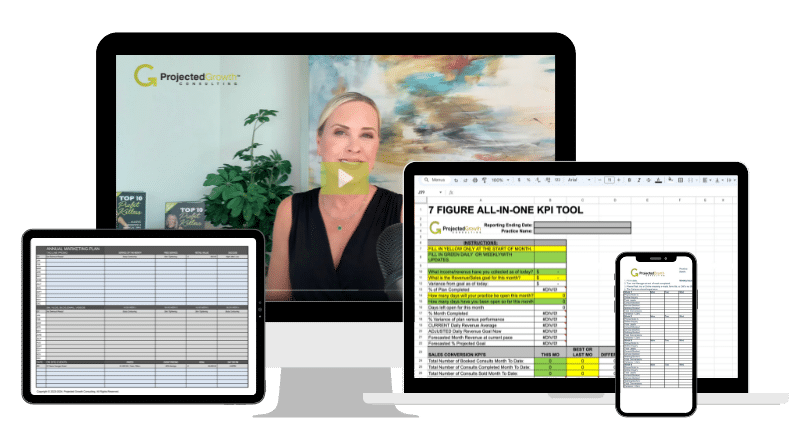
| Self-service tools. | How can we make a better decision consistently? | Operators with capable internal leaders. | Usable instructions and a recurring review habit. |
Education may clarify good management without changing a workflow. One-on-one advisory may identify the decision without installing it. Implementation support helps assign ownership and change routines. A staged sequence can begin with diagnosis, move into team education, and then use implementation support for changes requiring hands-on accountability.
A consultant should explain how recommendations become operating habits before you sign. Ask what changes in week one, who owns each action, how the team participates, and what happens when a deliverable stalls. If the answer is only “we provide guidance,” you are buying opinions rather than an accountable improvement process.
Projected Growth Consulting describes its work in four phases: assessment in weeks 1-2, strategy in weeks 3-4, implementation in weeks 5-8, and optimization in weeks 9-12. This is a company-described process, not a guarantee. Use it as a test of whether a prospective consultant connects diagnosis to execution.

The first week should produce a defined starting point, not a generic presentation. The consultant should identify the constraint, request reports and SOPs, interview people closest to the work, and document the baseline. You should know which problem is first, how it will be measured, and what information is missing.
Every recommendation needs an owner, due date, and definition of done. The consultant may own the framework and coaching. Your practice must assign internal owners for decisions and daily execution. Ask to see a sample action tracker before signing.
Implementation should not happen around the team. The people who schedule patients, manage supplies, lead providers, and close follow-up gaps understand where processes break. A credible consultant creates a cadence with the appropriate staff and a shared record of decisions and blockers.
Ask for the escalation path during evaluation. A stalled action should be named, assigned, and discussed rather than carried forward silently. The consultant should distinguish a capability problem, missing decision, resource constraint, and process failure. Then the team can reset the owner or redesign the workflow.
A useful engagement should leave the practice operating differently, not merely holding more recommendations. By day 90, you should have a defensible baseline, a short set of decisions, installed operating routines, named owners, and a review of what changed.
Document service mix, revenue by service or provider where supported, COGS, staffing constraints, lead-to-booking performance, cancellations, and reporting reliability. Identify which numbers are known, estimated, or untrusted. A baseline lets the owner distinguish a demand, capacity, sales, or delivery problem.
Strategy should narrow the field. Document priorities, decision criteria, targets, and tradeoffs. Every priority needs an owner, due date, and measure. If the strategy cannot tell the team what to stop doing, it is not specific enough.
Implementation turns recommendations into management practice. It may include a weekly KPI review, financial tracking, service-level reporting, updated SOPs, and a meeting rhythm that turns exceptions into actions. The owner should not remain the only person who understands the plan.
Compare current performance with the baseline and explain meaningful variance. Some initiatives need refinement. Others should stop. A strong final review states what was implemented, what evidence supports the change, what remains uncertain, and who owns the next cycle. For a broader framework, review Projected Growth Consulting’s healthcare business consulting profit framework.
Medical practice management consultants are not a substitute for an undecided owner, missing data, or an internal leader who cannot carry the work forward. If those foundations are missing, outside help may produce a polished plan that no one implements.
Someone inside the practice must own the decision, explain the change, monitor the result, and correct execution. If nobody has authority or time, assign accountability before consulting begins.
A consultant does not need perfect reporting. The practice should provide a service list, recent revenue, direct costs, provider or room capacity, labor assumptions, discounts, and relevant expenses. Financial statements help leaders assess performance. See the med spa profit and loss guide if records are not organized.
Operational analysis should not override clinical judgment, scope-of-practice requirements, patient safety, or provider standards. Resolve clinical, compliance, and safety questions with the appropriate qualified professional first.
Book a strategy call to discuss your practice constraint and scorecard.
Choose a consultant who can diagnose one constraint, connect it to a scorecard, and show how the team will implement the fix. Ask for relevant practice experience, sample deliverables, decision rights, cadence, and metrics.
Ask what happens after recommendations are delivered. Strong support includes owners, SOPs, manager training, recurring metric reviews, and a process for correcting missed commitments. Request a sample 30-day work plan.
A focused project fits a defined bottleneck. Ongoing advisory fits leaders who need recurring coaching, scorecard review, and help adapting the operating system. Choose based on the constraint and accountability required.
At 90 days, expect a documented baseline, agreed scorecard, named owners, implemented changes, and an evidence-based review. The outcome is a repeatable management process, not a guaranteed revenue figure.
If you can identify the operating constraint limiting your practice, connect it to a baseline and measurable decision. Book a strategy call to discuss your constraint, baseline, and next operating decision with Projected Growth Consulting.

Written by
Founder & CEO, Projected Growth Consulting
Kelly Smith is a med spa business consultant with 20+ years of industry experience and the founder of Projected Growth Consulting. A former 7-figure med spa owner, published author of 5 books, and international speaker, Kelly has helped 6,000+ practices generate over $250 million in additional revenue through proven growth strategies.