
The U.S. medical spa market will reach $25.8 billion by 2034. This massive growth creates a rare opportunity for practice owners to build real wealth and enterprise value, but only if you have a disciplined plan to capture it.
Schedule your strategy consultation today and build a data-driven medspa marketing plan that attracts high-value patients and grows your practice.
A medspa marketing plan connects patient acquisition with retention systems that maximize lifetime value. It allocates budget across digital ads, SEO, organic social, and events, all tied to measurable revenue goals rather than vanity metrics.
Running a medical spa today is harder than it used to be. The market is crowded with new competitors, and patients have more choices than ever. Without a clear medspa marketing plan, you are likely overspending on ads that do not attract the right patients. A strategic plan gives you a roadmap to grow revenue while keeping your team focused and efficient.
The sector is seeing a surge in demand as more consumers seek aesthetic services. Experts project the U.S. med spa market will reach $25.8 billion by 2034. This growth creates profit potential, but it also means rivals are investing aggressively. Without a structured approach, you will lose ground to practices that operate with clarity.
Digital channels are essential to this growth. Many owners believe word-of-mouth is the only reliable source of quality patients. However, research shows that web-based leads convert at rates comparable to traditional referrals. Your online presence must be strong to compete.
Generating a lead is only the first step. Too many practices spend heavily on advertising but fail to convert those clicks into paying patients. An effective medspa marketing plan integrates acquisition with structured sales systems. Every inquiry must be tracked so no opportunity is lost.
Service selection directly impacts profitability. It is tempting to chase every trend, but low-margin treatments erode gains. Focus on high-ticket services and recurring revenue rather than one-time transactions. This approach builds a resilient practice with stronger med spa marketing ideas that produce measurable returns.
A marketing plan is ultimately about building a business that has real equity value. Predictable revenue streams and a loyal patient base make your medspa far more attractive to future buyers. A plan replaces reactive decisions with a system that runs consistently, transforming your practice from a job into an asset.
With a system in place, you can track exactly where every dollar is spent, measure patient lifetime value, and calculate true acquisition costs. This data enables smart decisions instead of guesswork, and it is the foundation of a practice that grows without burning out the owner or staff.
A strategic medspa marketing plan transforms a chaotic, expensive lead chase into a predictable revenue engine. It replaces intuition with data and reactive spending with deliberate budget allocation across every channel.
You cannot build a strong business on guesswork. A effective med spa marketing plan begins with clearly defined objectives. Most owners fixate on lead volume alone. But a practice generating 500 low-quality leads per month is worse off than one attracting 50 high-intent prospects who convert and return.
Start with your monthly revenue goal, then work backward. If you need $100,000 per month in new-patient revenue and your average ticket is $1,500, you need approximately 67 new patients per month. From there, calculate the lead volume required based on your current conversion rate. This math eliminates guesswork and gives you a concrete number to design your marketing around.
Beyond revenue, track metrics that measure operational health. Patient lifetime value (LTV), customer acquisition cost (CAC), and the LTV-to-CAC ratio tell you whether your marketing is sustainable. A healthy med spa maintains an LTV-to-CAC ratio of at least 3:1. If you are spending more than one-third of a patient’s projected lifetime value to acquire them, your model needs adjustment.
Apply the SMART framework to every objective. Instead of “grow social media followers,” set a specific goal like “increase Instagram-sourced consultation requests by 25 percent within 90 days.” This level of specificity allows you to measure progress.. Pivot when needed, and prove ROI to stakeholders.
Clear objectives turn your medspa marketing plan from a wish list into a financial roadmap. Revenue targets, LTV-to-CAC ratios, and SMART goals provide the guardrails that keep every marketing dollar working toward a measurable outcome.
Not every patient is equally valuable to your practice. A medspa marketing plan that tries to appeal to everyone ends up resonating with no one. Effective segmentation allows you to tailor messaging, offers, and ad targeting to the prospects most likely to book high-value treatments and remain loyal.
Different age demographics respond to different channels and messaging. Patients in their 20s and 30s often discover med spas through Instagram and TikTok, and they gravitate toward preventative treatments. Patients in their 40s and 50s are more likely to search Google for specific concerns like skin tightening or vein therapy and prefer educational content over social media trends. Segment your campaigns accordingly.
Map your service menu to patient motivations. Some patients seek anti-aging results, others want body contouring, and a growing segment is interested in biohacking and wellness optimization. Each group requires distinct messaging, imagery, and ad targeting. A medspa marketing plan that groups all prospects into a single bucket wastes budget on low-relevance impressions.
Build 3 to 5 detailed patient personas based on your actual booking data. Include demographics, psychographics, common objections, preferred communication channels, and average spend. Use these personas to guide content creation, ad copy, and even treatment room design. When your marketing speaks to a specific person, conversion rates improve measurably.
Patient segmentation prevents wasted ad spend by targeting the prospects most likely to book and return. Age cohorts, treatment motivations, and data-backed personas make your medspa marketing plan precise rather than scattershot.
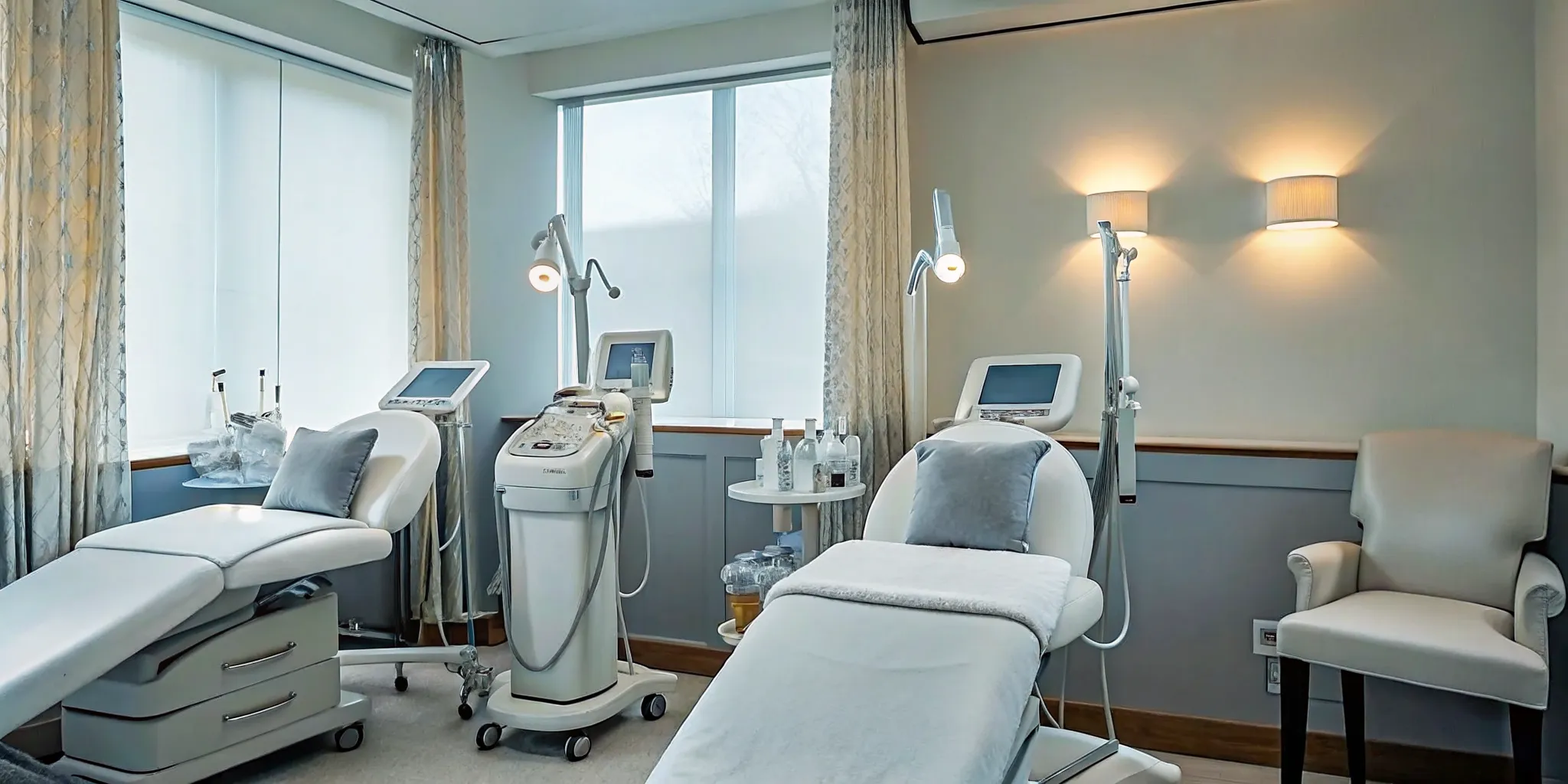
Understanding your competitive landscape is essential for positioning your practice effectively. A thorough competitive analysis reveals gaps in the market, identifies what your rivals are doing well, and helps you differentiate your medspa marketing plan for maximum impact.
Start by auditing the top 5 med spas within a 15-minute drive of your location. Evaluate their Google Business Profile completeness, review volume and ratings, website quality, and social media engagement. Tools like Google Maps and SEMrush can reveal which competitors rank for your target keywords and how much traffic they capture.
Look for services your competitors do not offer or underemphasize. If every local med spa highlights Botox and fillers but few promote hormone replacement therapy or IV hydration, that gap represents a differentiation opportunity. A medspa marketing plan that leans into underserved services can capture market share with less competition.
Based on your competitive audit, decide how you want to position your practice. Options include premium luxury, clinical expertise, affordability, or convenience. Your positioning should align with your target patient personas and inform every element of your marketing, from website design to ad creative to pricing strategy.
A competitive analysis reveals where your med spa can win. By auditing local rivals, identifying service gaps, and choosing a distinct positioning, your medspa marketing plan gains a strategic edge that no amount of ad spend can replicate.
Your website is the most important marketing asset your med spa owns. It is where prospects form their first impression, evaluate your credibility, and decide whether to book. A medspa marketing plan must prioritize digital presence as the foundation of every other channel.
Your site must load in under three seconds, display beautifully on mobile devices, and clearly guide visitors toward booking. Include service pages with before-and-after galleries, provider bios with credentials, pricing transparency where possible, and a prominently placed phone number and booking button. Every page should answer the question: “Why should I choose this practice?”
Local SEO is the highest-ROI channel for med spas. Claim and optimize your Google Business Profile with accurate hours, categories, services, photos, and a steady stream of positive reviews. Embed local schema markup on your site. Target location-specific keywords like “Botox in Charlotte” or “med spa near SouthPark” in your page titles and content.
Create educational content that answers the questions your ideal patients are searching. Blog posts about treatment recovery times, cost comparisons, and before-and-after expectations capture search traffic from prospects in the research phase. Each piece of content should include a clear next step, whether that is booking a consultation or downloading a treatment guide.
Your digital front door is where prospects decide whether to trust you. Site speed, local SEO, Google Business Profile optimization, and educational content all work together to turn search traffic into booked consultations.
Budget allocation is where most med spa marketing plans break down. Owners either spread their budget too thin across every available channel or dump everything into one tactic and hope it works. A strategic approach distributes investment based on channel performance and patient acquisition cost.
For a med spa with a monthly marketing budget of $10,000 to $30,000, a proven allocation looks like this.
| Channel | Percentage of Budget | Primary Goal |
|---|---|---|
| Google Ads (Search + Local) | 35% | High-intent patient acquisition. |
| SEO and Content Marketing | 25% | Sustainable organic traffic growth. |
| Social Media (Organic + Paid) | 20% | Brand awareness and engagement. |
| Email Marketing and Retention | 10% | Patient loyalty and rebooking. |
| Events and Community Partnerships | 10% | Local presence and referrals. |
Allocate a larger share of your ad budget to treatments with the highest profit margins and patient lifetime value. Laser packages, injectable memberships, and multi-session body contouring programs generate recurring revenue that justifies higher acquisition costs. Resist the urge to discount low-margin services as a lead generation tactic.
Implement tracking systems that connect each marketing channel to actual booked appointments and revenue. Use unique phone numbers, UTM parameters, and booking-source fields in your practice management software. A medspa marketing plan without closed-loop tracking is operating blind. You cannot optimize what you do not measure.
Budget allocation should follow performance, not intuition. The recommended channel split provides a starting point, but your actual mix should be refined based on CAC, conversion rates, and revenue per channel for your specific practice.
Data is the competitive advantage that separates growing med spas from struggling ones. A medspa marketing plan without rigorous measurement is little more than a wish list. You need a system that tracks the metrics that drive financial outcomes.
Track every step of the patient journey from first click to booked appointment to treatment completion. Calculate your lead-to-consultation conversion rate, consultation-to-book rate, and average days from first touch to revenue. These numbers reveal exactly where your funnel is leaking and what needs to be fixed.
Patient lifetime value is the single most important metric for your med spa. Calculate it by multiplying average treatment value by the number of visits per year by the average retention span in years. If your LTV is $8,000 and your CAC is $600, your marketing is highly efficient. If your CAC approaches $2,000, your model needs structural change.
Invest in CRM and analytics tools that automate tracking. Manual spreadsheets break down as soon as you manage more than a few hundred leads per month. Modern CRM platforms designed for medical aesthetics can track source attribution, automate follow-up sequences, and generate reports that show exactly which channels deliver the best return.
Measurement transforms marketing from a cost center into a profit driver. When you track conversion rates, LTV, and CAC with precision, every dollar in your medspa marketing plan can be justified by data rather than hope.

Focus on high-margin services with strong lifetime value rather than chasing volume through discounts. A medspa marketing plan should allocate 60 to 70 percent of its budget to high-ticket treatments like laser packages and injectable memberships. Reserving the remainder for awareness and retargeting campaigns.
Data-driven marketing eliminates guesswork by tying every dollar spent to measurable outcomes. A medspa marketing plan built on real conversion data, patient lifetime value, and channel-level ROI consistently outperforms intuition-based approaches by 30 to 50 percent in cost per acquisition.
Paid channels like Google Ads can produce leads within days, but SEO and content marketing typically require 3 to 6 months to build meaningful organic traffic. A comprehensive medspa marketing plan should balance short-term paid acquisition with long-term organic investment for sustainable growth.
The most effective strategies combine local SEO, Google Ads targeting high-intent keywords. Instagram and TikTok for visual storytelling, email automation for patient retention, and strategic partnerships with complementary local businesses. The ideal mix depends on your location, target audience, and service mix.
Building a marketing plan that consistently attracts high-value patients and grows your practice’s enterprise value is complex. You need the right data, the right channels, and the right systems. You do not have to figure it out alone.
Schedule a strategy consultation with Projected Growth Consulting and get a customized medspa marketing plan designed for your specific practice, market, and growth goals.

Written by
Founder & CEO, Projected Growth Consulting
Kelly Smith is a med spa business consultant with 20+ years of industry experience and the founder of Projected Growth Consulting. A former 7-figure med spa owner, published author of 5 books, and international speaker, Kelly has helped 6,000+ practices generate over $250 million in additional revenue through proven growth strategies.