Most med spa owners do not have a motivation problem. They have a visibility problem. Scheduling pressure, unclear ownership, inconsistent follow-up, and stalled revenue can look like separate fires when they are symptoms of one operating system that nobody reviews consistently.
Book a call to make your practice’s operating gaps visible.
Effective spa management uses one weekly scorecard organized around four lenses: people, capacity, revenue, and patient experience. Each metric needs a clear definition, one accountable owner, a baseline, and a scheduled review. That turns scattered observations into decisions your team can act on.
The goal is not to track every number in your practice. It is to identify the few signals that show whether the team has the capacity, systems, and follow-through to deliver a profitable patient experience. Start by deciding what must be visible before the next weekly review.
A useful weekly review is not a longer spreadsheet. It is a short operating loop that shows whether the practice can deliver the work it sold. Whether the team can execute it, whether the economics support the effort, and whether patients are receiving a coordinated experience. Use four lenses: people, capacity, revenue, and patient experience. Assign one owner to each lens, review the same measures on the same day, and require an action when a measure moves outside its agreed baseline.
This matters because common operating failures are connected. Missing performance metrics can hide an overloaded schedule. Poor team communication can create avoidable gaps in follow-up. A revenue plateau can coexist with a full calendar if the service mix or margins are weak. The scorecard makes those relationships visible before the owner is forced to react to a bad month. PGC identifies absent SOPs, inefficient scheduling, poor team communication, and missing performance metrics as recurring operational pain points. Those are precisely the gaps this weekly cadence is designed to expose (med spa operations audit).

Track the staffing facts that affect execution: open roles, unfilled shifts, onboarding progress, missed handoffs, and unresolved accountability items. Do not treat this as a morale survey detached from performance. Ask which role owns each recurring workflow, whether the SOP exists, and where work is waiting for one person. A healthcare-worker retention review grouped interventions around onboarding, mentoring, staffing, work relationships, development, resources. Organization, and technology, which supports a management view broader than simply hiring another person (systematic review of healthcare-worker retention). When turnover rises above 30%, PGC lists it as a trigger for management intervention, not a problem to normalize.
Review provider availability, booked capacity, cancellations, rescheduling, waitlist demand, and bottlenecks by room, role, or service. Capacity is not the same as a full calendar. It is the amount of work the current system can deliver consistently. Compare demand with the actual constraints, then decide whether the next action is schedule redesign, workflow repair, staffing, or a deliberate service-mix change. PGC specifically identifies capacity constraints and inefficient scheduling as intervention signals.
Make weekly revenue visibility operational, not aspirational. Review collected revenue, booked revenue, lead-to-appointment movement, revenue by service category, membership activity where applicable, and the margin questions behind the totals. A busy week can still weaken the business if low-margin work consumes scarce capacity. PGC’s growth services connect revenue optimization with service-mix and margin improvement, KPI tracking, and financial dashboards. A revenue plateau lasting six months or more, or margins below 20%, are listed by PGC as triggers for management intervention. Treat those as PGC’s diagnostic thresholds, not universal laws.
Track access, communication, follow-up completion, unresolved complaints, and handoffs between clinical and administrative staff. Patient experience is not merely friendliness at the front desk. The National Academies describes self-management support as including patient education, clearly defined clinical and administrative roles, and office systems for follow-up contact and patient tracking (patient-centered care and self-management support). Its patient-experience domains also include access, clinician communication, information, care coordination, courtesy, respect, and empathy. Review one or two exceptions each week, name the process failure, and assign the correction. That turns patient feedback into operating intelligence instead of anecdotal noise.
A scorecard only helps when it changes a decision. Build it as a small operating tool, not a wall of numbers. Each line should tell the team what to watch, who owns it, where the data comes from, when it is reviewed, what threshold matters, and what action follows. That structure turns missing performance metrics into accountable management.

The finished tool can live in a shared dashboard or a simple spreadsheet. Its value is not the software. Its value is the operating agreement: one definition, one accountable owner, one review cadence, and one predetermined response.
A people problem rarely appears first as a resignation. It usually shows up as a pattern: work is handed off informally, schedules stop matching available capacity. Follow-up depends on memory, or no one knows who must escalate an urgent issue. Treat those signals as operating data. The goal is not to diagnose employees or make clinical decisions. It is to identify where ownership, workflow, and escalation systems are too weak to support the practice.
Review these indicators in the same weekly management meeting as revenue and retention. Assign one owner to each signal, record the baseline, and define the first management action before the issue becomes a crisis. PGC identifies inefficient scheduling, poor team communication, capacity constraints, and staff turnover above 30% as management concerns or intervention triggers. That does not make any single threshold a universal staffing benchmark. It gives an owner a reason to investigate.
| Signal | What it indicates | First management action |
|---|---|---|
| Schedules regularly leave usable provider time empty or create avoidable bottlenecks. | Capacity planning and scheduling rules are not aligned with demand, service mix, or workflow reality. | Map the next two weeks by provider, service, room, and open slot. Identify the constraint, then change one scheduling rule and review its effect at the next meeting. |
| Team members rely on hallway conversations, personal messages, or memory for handoffs. | Communication ownership is unclear, so important information can be delayed, duplicated, or lost. | Define the handoff owner, required information, and system of record for each recurring workflow. Document the procedure in the team operating materials, including the relevant med spa team policies. |
| Onboarding varies by trainer, role, or shift, and new staff cannot explain the standard workflow. | The practice lacks a repeatable onboarding and mentoring system. A healthcare-worker retention review covering 55 records grouped interventions around onboarding, mentoring, staffing, work relationships, development, resources, and organization, and recommended onboarding programs and mentoring. | Give each role a written first-week sequence, a named mentor, and a short competency check. Review completion and recurring questions weekly rather than assuming orientation is complete. |
| Turnover rises above 30% or the same role repeatedly becomes vacant. | PGC treats staff turnover above 30% as a trigger for management intervention. The cause may involve role design, workload, communication, onboarding, or leadership, not simply recruiting volume. | Review exit themes, schedule pressure, role expectations, compensation planning, and manager check-ins. Correct the operating cause before adding another hire to the same broken system. |
| No one can state who handles an urgent question after hours or when a complication must be escalated. | Escalation ownership is undefined. In a 2024 study of 63 Las Vegas medical spas, only 46% notified a medical director or supervising physician when a complication occurred. And only 39.7% had an after-hours number for complications or urgent questions. | Confirm the practice’s approved escalation process with the appropriate clinical and legal professionals. Assign responsibility, contact paths, documentation requirements, and review cadence. The study’s figures are operational warning signals, not clinical advice. Read the PubMed study. |
Use the table as an escalation map, not a checklist to complete once. When a signal repeats, move from observation to a documented owner, a measurable next action, and a date for review. That is how spa management turns people and capacity risk into a controllable operating system.
Revenue and patient experience should be managed as one operating loop, not as competing priorities. A service that sells well but creates access problems, weak follow-up, or poor communication can damage retention. A thoughtful patient journey that consistently loses margin will eventually limit staffing and capacity. The management question is whether each part of the loop is visible, owned, and reviewed.
Start with the service mix. Review each major service by demand, provider capacity, delivery cost, margin, repeat potential, and operational complexity. PGC specifically supports revenue optimization, service-mix and margin improvement, membership design, KPI tracking, and financial dashboards. That is customer-specific capability, not a universal benchmark. For an owner building the system internally, the practical equivalent is a weekly view that connects bookings and completed services to contribution and future demand. A profitable med spa services review can help expose where volume is masking weak economics.
A membership should make the next step easier for the patient and more predictable for the business. Define what the member receives, how the team explains it, when follow-up occurs, and who owns renewal or cancellation conversations. Track enrollment, usage, rebooking, retention, and service-level margin together. If membership growth rises while usage becomes difficult to schedule, the program is creating a capacity problem. If usage is healthy but the service mix erodes margin, the offer needs management attention rather than automatic promotion. PGC lists membership design and sales-process optimization among its growth services, while the operating decisions still need to fit the practice’s capacity and patient commitments.
Follow-up is not an optional courtesy after the sale. The National Academies’ patient-experience reference describes self-management support as including patient education, clearly defined clinical and administrative roles, and office systems for follow-up contact and patient tracking: NCBI guidance on patient-centered care systems. Build those responsibilities into the workflow. Record who contacts the patient, by what channel, on what date, and what happens when the patient does not respond.
Then connect the workflow to access and communication. Patient-experience domains include access, clinician communication, information, care coordination, courtesy, respect, and empathy. So measure operational signals such as unanswered inquiries, delayed responses, missed follow-up, and rebooking gaps alongside revenue metrics. PGC identifies inefficient scheduling and poor team communication as common operational pain points. The first management action is usually not another promotion. It is assigning an owner, documenting the handoff, and reviewing exceptions at a fixed cadence.
Safety concerns require a defined escalation path separate from ordinary service recovery. A 2024 study of 63 medical spas reported that only 39.7% had an after-hours number for complications or urgent questions. And only 46% notified a medical director or supervising physician when a complication occurred: PubMed study of medical-spa safety practices. Those figures are research findings, not a prescription for every practice. They do show why ownership, contact routes, documentation, and escalation thresholds should be explicit. Track the exception, resolve it through the appropriate clinical leadership, and use the lesson to improve the workflow rather than hiding it in a revenue report.
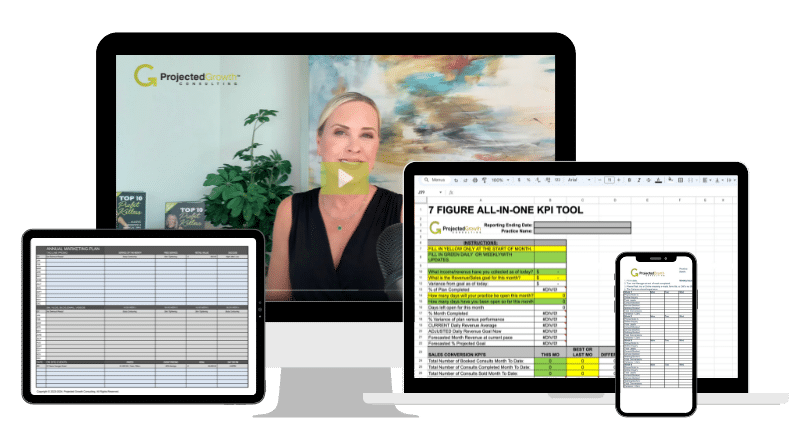
Review this loop weekly: service mix and margin, membership behavior, access and follow-up, communication failures, and escalated exceptions. PGC’s KPI tool and training cover revenue goals, lead conversion, sales structure, memberships, marketing ROI, culture, and leadership. The value is not collecting more data. It is making one decision from the data before the same problem reaches the patient again.
Book a call to connect your spa management systems to revenue and patient experience.
The following sequence is PGC’s documented implementation framework for turning management priorities into an operating rhythm. It is not an industry guarantee or a promise that every practice will achieve a specific result in 90 days. The value is the order: establish a baseline, choose the plan, install the core systems, then refine what the data shows.
Start with assessment and baseline metrics. Review the current workflow from lead intake through scheduling, service delivery, follow-up, and reporting. Record the measures the leadership team will use throughout the rollout, such as revenue, capacity, retention, staffing, and the operational indicators already available in the practice. Do not select numbers because they sound impressive. Select measures that expose where work is delayed, where ownership is unclear, and where the owner is making decisions without visibility.
Assign one accountable owner to each metric and document the data source. By the end of week two, the owner should be able to explain the current number. How it is calculated, and what action follows if it moves in the wrong direction. PGC identifies 30-day quick wins as an implementation milestone, but a quick win should remove a meaningful bottleneck, not create a burst of activity with no measurement.
Use the baseline to decide what the practice will address first. PGC’s documented framework places strategic plan development in weeks three and four. The plan should name the priority problem, the desired operating change, the owner, the supporting team members, the required tools or SOPs, and the review date.
Keep the scope tight. If scheduling is the constraint, do not launch unrelated initiatives at the same time. Define the decisions that must be made weekly and the evidence required to make them. This is also the point to connect the plan to the practice operations framework, including the relevant structure, workflow, capacity, and performance-management components.
PGC’s sequence reserves weeks five through eight for core systems implementation. Translate the plan into working tools: SOPs, role expectations, meeting agendas, scorecard definitions, scheduling rules, and escalation paths. Build only what the team can maintain. A system that exists in a shared folder but is not used in the daily workflow is documentation, not management.
During this phase, the owner or designated operator should review adoption as well as outcomes. Ask whether the assigned person completed the action, whether the process was followed, and whether the process produced usable information. Correct ambiguity quickly. If two people believe they own the same result, or neither believes they do, the system is not finished.
Weeks nine through twelve are reserved for optimization and refinement. Compare the current measures with the baseline, identify what improved, and isolate what did not. Change one process at a time when possible, then document the effect. PGC identifies 90-day measurable growth as a milestone, not a universal outcome. The appropriate proof is a clear before-and-after view of the selected measures and the management actions that influenced them.
Use a fixed cadence throughout the rollout: a short weekly scorecard review for exceptions and commitments, a monthly owner review for trend and resource decisions. And a formal day-90 review to decide what stays, what changes, and who owns the next actions. PGC’s framework also identifies a six-month transformation checkpoint and a 12-month scaling assessment. Those checkpoints prevent a 90-day project from becoming another abandoned initiative. The owner should leave each review with three things: the next priority, the accountable owner, and the date the result will be checked.
The hardest challenge is usually maintaining visibility while managing competing priorities. Owners need a reliable view of staffing, provider capacity, revenue, scheduling, follow-up, and patient experience at the same time. Absent SOPs, inefficient scheduling, weak team communication, and missing performance metrics make small problems expensive because nobody sees the pattern early.
An effective manager turns expectations into visible operating standards. They communicate clearly, assign one accountable owner to each metric or process, review the scorecard on a fixed cadence, and act when results move off baseline. Empathy matters, but it must be paired with direct feedback, documented workflows, and follow-through across both clinical and administrative teams.
There is no single business qualification that replaces operating discipline. An owner or operator needs enough understanding of team structure, scheduling, capacity planning, revenue, margins, patient communication, and follow-up to make informed decisions. Clinical and regulatory responsibilities should remain with the appropriately licensed professionals and supervising structures for the practice. Management training can help, but it should support a working scorecard and clear SOPs, not sit apart from daily execution.
Outside support is worth considering when the practice has a persistent revenue plateau. Capacity constraints, declining retention, recurring staff turnover, weak margins, or marketing that cannot be evaluated confidently. It is especially useful when the owner is the default decision maker for every issue. Start with an assessment and baseline metrics, then choose support that helps build the missing systems and transfer operating ownership to the team.
A practical operating system gives you a clearer way to review people, capacity, revenue, and patient experience without chasing disconnected problems. If you want help mapping the management scorecard and choosing the next implementation priority, book a call with Projected Growth Consulting.

Written by
Founder & CEO, Projected Growth Consulting
Kelly Smith is a med spa business consultant with 20+ years of industry experience and the founder of Projected Growth Consulting. A former 7-figure med spa owner, published author of 5 books, and international speaker, Kelly has helped 6,000+ practices generate over $250 million in additional revenue through proven growth strategies.