Med spa inventory management is not just a back-office task. It is a profit protection system. When injectables, retail products, consumables, and samples are not ordered, received, tracked, reconciled, and reviewed consistently, money leaks out of the practice before the owner can see it on the P&L.
Book a free strategy call with Projected Growth Consulting if you want help finding the operational leaks that are limiting your profit.
Too many med spas overlook the importance of inventory control until the symptoms are already expensive: unexplained shortages, expired products, low retail sell-through, weak ordering habits, and staff members who are not sure who owns each step. The fix is not simply buying more software. The fix starts with a clear operating protocol that connects purchasing, treatment room usage, retail sales, provider accountability, KPI reporting, and leadership follow-through.
In this guide, you will learn the inventory protocols every med spa owner should have in place, the KPIs to review, how to separate product controls by category, when software makes sense, and how inventory connects to overall practice growth.
Inventory management is critical because med spa products are expensive, time-sensitive, and easy to miscount if no one owns the system. Injectables, skincare, retail products, disposables, and samples all move through the business differently. Without a documented process, your team can order too much, run out of key products, lose track of treatment room usage, or miss slow-moving items until cash is already tied up on the shelf.
You should aim for retail to contribute at least 10% of business income or better. Retail can diversify revenue and create strong margins without adding as much provider time as services require. But retail only works when inventory is controlled. If product is disappearing, expiring, being sampled without documentation, or sitting unsold, it becomes a profit drain instead of a profit center.
Common warning signs include:
These issues can point to reconciliation gaps, poor ordering discipline, weak team accountability, theft, training problems, or pricing and promotion issues. If you are not tracking how much inventory flows in and out each week, you cannot know whether your inventory is driving profit or quietly eroding it.
A med spa inventory protocol should define who orders products, who receives them, how they are logged, how often counts happen, how usage is documented, how variances are investigated, and which KPIs the owner reviews. The protocol should be simple enough for the team to follow but detailed enough to protect expensive product categories.
At a minimum, your protocol should include:
Inventory is one part of a larger operating system. If your practice is trying to build stronger daily workflows, review these aesthetic clinic operations systems to see how inventory connects with scheduling, staffing, reporting, and patient experience.
Ordering and receiving are the first places to protect accuracy. A strong ordering process keeps the practice from tying up too much cash in product, while a strong receiving process makes sure what was ordered is what actually arrived and entered the system.
Par levels tell your team how much product should be available under normal demand. Reorder points tell your team when to buy more. These numbers should not be guessed. They should be based on treatment volume, retail sales velocity, vendor lead time, seasonality, event campaigns, and the minimum quantity needed to avoid stockouts.
A practical monthly review should ask:
Bulk ordering can create savings, but only when the volume discount does not create waste, slow-moving stock, or excess cash tied up on shelves. Your owner or inventory lead should approve unusually large orders, especially for products with expiration dates or products connected to a short-term promotion.
Not all inventory should be managed the same way. Injectables require tighter control because they are high-value and can materially impact treatment profitability. Retail products need sell-through tracking, display accountability, and promotional planning. Consumables need par-level discipline so the team does not interrupt service flow. Samples need documentation because they often disappear without being tied back to a consultation, campaign, or retail recommendation.
Use separate logs or categories for:
When product categories are separated, the practice can investigate the right problem faster. A retail sell-through issue is different from an injectable waste issue. A vendor shipping discrepancy is different from a provider documentation issue. Clear categories help leadership coach the team instead of guessing.
Tracking and reconciliation show whether inventory records match reality. A practice can have a beautiful product shelf and still be losing money if the system count, treatment room usage, retail sales, and physical count do not line up.
Weekly counts are the best baseline for most med spas because they catch issues quickly. Monthly counts alone can allow small errors to compound. The inventory lead should count physical stock, compare it against the system, note discrepancies, and flag any product that is expired, close to expiration, damaged, missing, or unusually slow-moving.
Monthly financial reconciliation should connect inventory activity to the P&L. This means comparing beginning inventory, purchases, ending inventory, product revenue, treatment usage, and cost of goods. As a rule of thumb, retail cost of goods should often land around 40% to 50%. If cost of goods rises toward 70% to 75%, the owner should investigate pricing, purchasing, shrinkage, waste, discounts, and documentation gaps.
For a broader view of how inventory impacts profitability, read this guide to average medspa profit margin.
A variance above 5% between expected inventory and actual inventory should trigger a structured review. Do not stop when the count is wrong. Build a simple variance checklist so the manager can identify the cause and prevent repeat problems.
Review these areas:
Once the cause is found, assign the corrective action to a person, not a vague process. Update the SOP, retrain the team member if needed, and check the same product category again the following week.
Inventory KPIs help the owner see whether products are supporting cash flow, margins, patient experience, and growth. The goal is not to track numbers for the sake of tracking. The goal is to make better decisions about purchasing, pricing, provider behavior, promotions, and operational accountability.
Start with a small dashboard the owner reviews every month:
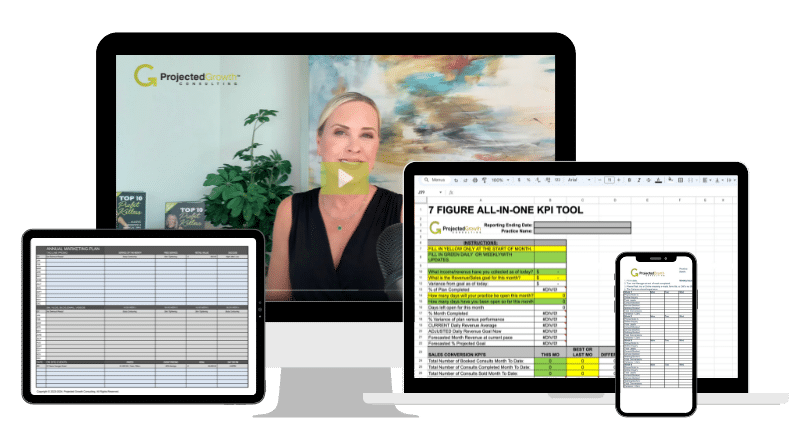
If you already use PGC KPI tools or coaching resources, add these metrics to the owner review rhythm. PGC has helped more than 6,000 practices and generated $250M+ in client revenue by helping owners connect daily activity to the numbers that matter.
Want a clearer KPI rhythm for your practice? Book a free success call and identify which inventory, sales, and operating numbers deserve leadership attention first.
Inventory losses are often a symptom of a larger operating issue. If the same variance keeps showing up, the team may not have clear ownership. If stockouts are frequent, ordering may not be tied to demand forecasting. If retail is not moving, providers may not be making recommendations. If samples disappear, front desk and provider workflows may not connect sampling to follow-up.
This is where med spa consulting can help. A consultant can look across sales, operations, marketing, leadership, and financial systems to determine whether the inventory issue is truly an inventory issue or a business system issue.
Your inventory protocol only works if the team understands it, follows it, and knows why it matters. Training should not be a one-time onboarding event. It should be part of the operating rhythm for providers, front desk, managers, and leadership.
Create role-based SOPs so each person knows what they own. Providers should know how to record product use, waste, samples, and treatment room transfers. Front desk should know how to process retail sales, returns, bundles, discounts, and sample follow-up. Managers should know how to order, receive, count, reconcile, investigate variance, and report KPIs to ownership.
Training should include:
An audit trail protects the practice and the team. Every product movement should have a clear record: what moved, when it moved, who moved it, why it moved, and where it went. This is especially important for injectables, high-cost retail products, multi-location transfers, and samples used during events or consultations.
Owners should review audit trail patterns monthly. If one provider has repeated documentation gaps, coach the provider. If one location has repeated transfer discrepancies, improve that location process. If the team is bypassing the system because it is too difficult, simplify the workflow before blaming individuals.
Med spa inventory management software can help with real-time stock visibility, low-stock alerts, purchase orders, supplier records, barcode scanning, lot tracking, reports, and multi-location transfers. Software becomes especially valuable when the practice has multiple providers, more than one location, high injectable volume, a larger retail program, or frequent events and promotions.
However, software will not fix unclear ownership. If your team does not have documented SOPs, consistent count habits, clean receiving workflows, and leadership review, a new platform can simply digitize the same confusion. Before investing, define your inventory categories, par levels, reorder points, count cadence, variance threshold, and KPI dashboard.
Use software when it helps you answer these questions faster:
For startup owners, inventory software should be selected as part of the broader operating model, not as a disconnected tool. The Business Startup Program includes the kind of financial, operational, and KPI planning that helps new practices avoid expensive setup mistakes.
Effective management of inventory for med spas is one of the many areas of the business that can improve profit. Inventory connects to retail strategy, treatment profitability, provider accountability, financial reporting, cash flow, marketing campaigns, and leadership discipline.
With 20+ years of industry experience, Projected Growth Consulting helps medical aesthetic practices install the systems, KPIs, and leadership habits needed to scale. PGC has served 6,000+ practices since 2011 and generated $250M+ in client revenue. Those results come from helping owners stop guessing and start managing the business through better numbers, clearer roles, and stronger execution.
If inventory problems keep resurfacing, the problem may not be the products. It may be the operating system. The right coaching can help you identify the highest-value fix first, whether that is ordering discipline, provider training, retail strategy, leadership accountability, or financial visibility. Learn more about med spa executive coaching if you want support building systems that stick.
How often should a med spa count inventory? Most med spas should complete weekly inventory counts and monthly financial reconciliation. High-value injectables, controlled retail products, and fast-moving consumables may need tighter spot checks so variance is caught before it becomes a margin problem.
What is a good inventory variance target for a med spa? A variance above 5% should trigger an investigation. The owner or inventory lead should compare purchase orders, receiving logs, treatment room usage, retail sales, samples, transfers, and waste documentation to find the cause.
Which inventory KPIs should med spa owners review? Med spa owners should review inventory variance, retail cost of goods percentage, product turns, days on hand, expired product value, stockout frequency, average order-to-receive time, and retail sell-through. These KPIs connect product control to cash flow and profitability.
Do med spas need inventory management software? Inventory management software helps when a practice has multiple providers, more than one location, high injectable volume, or retail products that are difficult to reconcile manually. Software is most useful after the practice has clear SOPs, assigned ownership, and reliable counting habits.
How does inventory management affect med spa profit margin? Inventory affects profit margin through purchasing discipline, product waste, shrinkage, stockouts, expired products, retail sell-through, and cost of goods. Strong inventory controls help the owner see whether products are protecting profit or quietly draining cash.

Written by
Founder & CEO, Projected Growth Consulting
Kelly Smith is a med spa business consultant with 20+ years of industry experience and the founder of Projected Growth Consulting. A former 7-figure med spa owner, published author of 5 books, and international speaker, Kelly has helped 6,000+ practices generate over $250 million in additional revenue through proven growth strategies.