Learning how to start a med spa is exciting, but the owners who win in 2026 are not the ones who simply lease a beautiful space, buy devices, and hope patients show up. A profitable medical spa starts with the right structure: clear positioning, compliant clinical oversight, a focused service menu, disciplined financial planning, strong consultation systems, and a launch plan that creates revenue before overhead gets heavy.
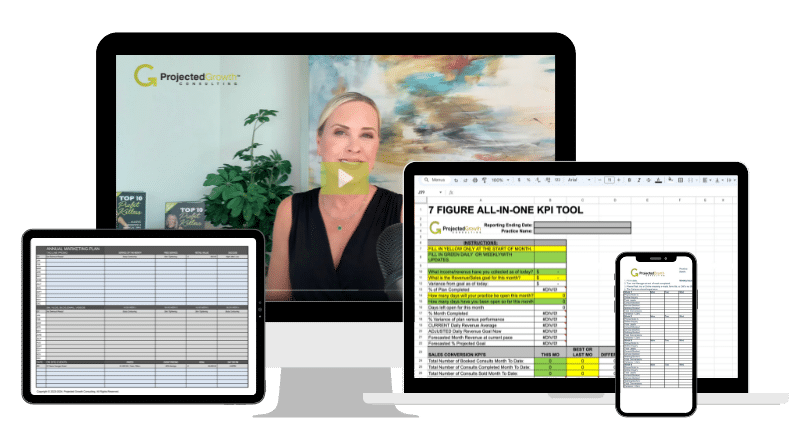
Want an experienced startup partner? Explore Projected Growth Consulting’s Business Startup Program for custom med spa business planning, equipment guidance, financial projections, and launch support.
This guide walks through the core decisions aesthetic entrepreneurs need to make before opening. It is written for future med spa owners, aesthetic nurses, plastic surgery or dermatology practices adding cash-pay services, and wellness entrepreneurs who want a serious business foundation instead of an expensive experiment.
Starting a med spa requires more than clinical talent and treatment demand. You need a business plan, a compliant ownership and medical director structure, licensed providers, the right insurance, treatment protocols, a profitable service mix, equipment and supply decisions, financing, marketing systems, consultation scripts, and KPI tracking from day one.
The simple version is this: a med spa is part medical practice, part retail business, part relationship-based membership model, and part sales organization. If one of those pieces is missing, the business can look polished but still struggle to produce predictable profit.
PGC has worked with more than 6,000 practices and has seen the same startup pattern repeat. Owners who build systems early make better decisions about space, staffing, equipment, pricing, and marketing. Owners who start with the buildout first often run out of cash before they have built a reliable patient acquisition and conversion machine.
Before you price a laser or tour a suite, define what your med spa will be known for. Too many startups try to offer every popular treatment because they fear missing revenue. That usually creates a confusing menu, higher training demands, more inventory, and weaker marketing.
Your concept should answer four questions:
A startup med spa might position around natural injectable outcomes, acne and skin transformation, hormone and wellness integration, body contouring, or age-management plans. The best concept is not always the trendiest one. It is the one your local market wants, your provider team can deliver safely, and your financial model can support.
Use competitor research before committing. Review local med spas, dermatology offices, plastic surgery practices, wellness clinics, and franchise concepts. Look at their reviews, offers, membership programs, service menus, price signals, and online booking experience. The goal is not to copy them. The goal is to find the gap you can own.
A business plan is not paperwork for a bank. It is the financial and operating blueprint that tells you whether the idea can survive. If you are seeking a loan or investor capital, it also becomes the document that proves you understand startup costs, projected revenue, staffing, marketing spend, and profitability milestones.
A strong med spa business plan should include:
PGC’s guide to mastering your med spa business plan is a helpful companion because it explains how to turn the idea into a usable planning document. For many startup owners, this is where hidden risk appears. Rent, payroll, loan payments, software, inventory, insurance, merchant fees, and marketing can create a monthly break-even point that is much higher than expected.
The business plan should force hard decisions early. If the projected revenue requires unrealistic patient volume in month one, you need to adjust the model before signing a lease. If the service menu depends on an expensive device with slow utilization, you need to revisit the equipment strategy. If marketing spend is too low to feed the consultation calendar, the launch plan needs more capital.
Med spas operate in a regulated environment because many aesthetic treatments are medical services. Rules vary by state, and ownership restrictions can be especially important. In some states, corporate practice of medicine rules affect whether a non-physician can own the clinical entity. Some models require a physician-owned professional entity with a management services organization for non-clinical operations.
This is where startup owners should involve qualified healthcare legal counsel. Do not rely on a competitor’s structure, a social media answer, or a generic template. Your attorney should help confirm the right entity structure, supervision requirements, delegation rules, consent documentation, advertising limitations, HIPAA obligations, and required permits or registrations for your state.
Your medical director is also more than a name on paper. The right medical director understands aesthetic medicine, creates or approves clinical protocols, supports provider training, participates in chart review when required, and helps protect patient safety. The exact level of supervision depends on state law and the services being performed.
For more detail, review PGC’s resources on medical spa regulations and medical spa laws. The key point is simple: compliance should be designed into the business before launch, not patched after a problem appears.
Your starting service menu should be narrow enough to market clearly and deep enough to support recurring patient relationships. A common startup mistake is building a menu around every device demo, every vendor promotion, and every trend. That creates a practice that is hard to explain and expensive to operate.
Start by separating services into three categories:
For many med spas, the initial mix may include injectables, skin health treatments, medical-grade skincare, laser or energy-based treatments, weight management, or wellness services. The right mix depends on your market, provider credentials, regulations, equipment budget, and brand position.
Run cost of goods analysis before adding any service. Look at product cost, consumables, provider time, room time, financing cost, maintenance, training, and realistic utilization. A treatment can look profitable at full schedule capacity but underperform if it only books a few times per week.
Pricing should also support your desired brand. If your launch strategy depends on heavy discounting, you may train patients to wait for promotions. A stronger approach is to package treatments into plans, memberships, and seasonal events that build urgency without damaging perceived value.
Equipment can be one of the largest startup expenses. It is also one of the easiest places to overspend. A beautiful device can become a financial drag if the service does not match your market, your team cannot sell it confidently, or your marketing budget cannot create enough demand.
Before buying or leasing equipment, ask:
Leasing can protect cash in some cases, but it can also create fixed monthly pressure before revenue is stable. Buying used may lower startup cost, but it requires due diligence on service history, warranty, parts, and support. Vendor financing can be useful, but only if your pro forma includes conservative utilization assumptions.
The smartest startup owners do not ask, “What device is hottest right now?” They ask, “What equipment helps us deliver our core promise profitably, consistently, and safely?”
Med spa startup costs can include legal setup, insurance, lease deposits, buildout, furniture, software, equipment, supplies, payroll, training, branding, website development, launch marketing, and cash reserves. The exact amount varies widely, but the principle is consistent: undercapitalized practices make rushed decisions.
Your financing plan should cover both opening costs and early operating months. A startup that has enough money to open but not enough money to market, train, and refine operations can become trapped quickly. Working capital matters because it gives you time to build lead flow, improve consultation conversion, and adjust staffing before panic sets in.
Common financing paths include SBA loans, bank loans, investor capital, owner cash, equipment financing, and strategic partnerships. Each has tradeoffs. Lenders and investors will expect a clear business plan with credible projections. This is one reason PGC’s Business Startup Program includes custom planning support for banking or investor conversations.
If you are building a startup budget now, book a call with Projected Growth Consulting to discuss the financial planning, service mix, and launch systems your med spa needs before you commit capital.
Your location should support access, patient comfort, provider efficiency, and brand trust. A premium address can help, but a high-rent space can also create avoidable pressure. Evaluate visibility, parking, nearby complementary businesses, demographics, competition, lease terms, expansion options, and buildout requirements.
Inside the space, workflow matters more than most new owners expect. Patients should move through the practice smoothly from greeting to consultation, treatment, checkout, rebooking, and follow-up. Providers need treatment rooms stocked properly, documentation workflows that protect accuracy, and schedules that allow enough time for quality care.
Map the patient journey before opening:
This is where startups can outperform bigger competitors. A clear, warm, organized experience builds trust before the patient ever receives a treatment.
A med spa team is not only a clinical team. You need people who can educate, follow up, sell ethically, document accurately, and create patient loyalty. Even a small startup should define roles clearly before hiring.
Key roles may include the owner or operator, medical director, injectors or licensed providers, estheticians, front desk or patient coordinator, marketing support, and bookkeeping or financial support. In the early stage, one person may cover multiple functions, but the responsibilities still need to be named.
Hiring should include both skill and behavior standards. A talented provider who resists consultation structure can hurt revenue. A friendly front desk employee who fails to follow up can waste marketing dollars. A manager who does not track numbers leaves the owner guessing.
Create standard operating procedures for phone intake, consultation flow, charting, photography, checkout, follow-up, memberships, refunds, inventory, patient complaints, and daily closeout. SOPs are not corporate clutter. They protect consistency as volume grows.
A strong launch begins before the doors open. Your goal is to create awareness, capture leads, book consultations, and start building community trust before the first full month of rent and payroll hits.
Your launch marketing plan should include:
PGC’s medical spa marketing budget template can help you think through spend allocation. The key is to connect marketing to operational capacity. If your campaign books consultations but the team cannot answer quickly, confirm appointments, present treatment plans, and follow up, the marketing dollars will leak.
Do not wait until opening week to decide how leads will be handled. Lead response time, front desk scripting, consultation scheduling, and no-show prevention should be ready before the first campaign runs.
The consultation is where interest becomes revenue. In a startup med spa, every consultation matters because marketing cost, provider time, and early cash flow are under pressure. Your consultation process should be repeatable, ethical, and focused on patient goals.
A strong consultation system includes discovery questions, visual assessment, treatment plan education, clear pricing, financing or payment options, and confident next-step recommendations. The patient should leave understanding the plan, not just the price of one treatment.
Memberships can also stabilize cash flow when they are designed correctly. Instead of relying only on one-time visits, memberships encourage ongoing care, improve retention, and make monthly revenue more predictable. PGC’s article on the med spa membership model explains why recurring revenue can improve both growth and exit value.
Finally, track KPIs from the beginning. At minimum, monitor leads, booked consults, show rate, consultation close rate, average ticket, revenue by provider, revenue by service, cost of goods, payroll percentage, marketing cost per lead, rebooking rate, membership count, and profit margin. Weekly tracking keeps you from managing by emotion.
Most med spa startup mistakes are predictable. They happen when owners prioritize appearance before economics or rely on hope instead of systems.
PGC’s medical spa startup checklist is a practical next resource if you want a checklist-style view of what needs to be organized before opening.
If you are within 90 days of opening, the plan needs to become operational. Use this simple sequence to pressure-test your readiness.
Need a custom startup roadmap instead of a generic checklist? Contact Projected Growth Consulting to build a med spa launch plan around your market, budget, services, and growth goals.
Starting a med spa in 2026 can be a strong business opportunity, but success depends on disciplined planning. The owners who grow fastest usually do the least guessing. They validate the market, protect compliance, invest carefully, train the team, track the numbers, and build conversion systems before the pressure of daily operations takes over.
If you want to open with confidence, treat the startup phase as the foundation of your future revenue engine. The decisions you make now will shape your margins, your patient experience, your team culture, and your ability to scale.
Projected Growth Consulting helps med spa startups and aesthetic practices build that foundation with custom business planning, financial projections, equipment and service guidance, marketing strategy, SOPs, KPI systems, and coaching built from years of real medical aesthetics experience.

Written by
Founder & CEO, Projected Growth Consulting
Kelly Smith is a med spa business consultant with 20+ years of industry experience and the founder of Projected Growth Consulting. A former 7-figure med spa owner, published author of 5 books, and international speaker, Kelly has helped 6,000+ practices generate over $250 million in additional revenue through proven growth strategies.