A first conversation with a med spa broker can shape how you think about timing, value, and what a sale would require. Before you accept an introduction or share sensitive information, build a one-page owner brief that separates your goals, verified facts, and open questions. It helps you direct the conversation instead of letting a sales pitch define your options.
Discuss your practice’s next move
A broker conversation is more useful when you know what you want to learn. Brokers may ask about revenue, earnings, location, services, staffing, owner involvement, and timing. Your job in an initial discussion is not to prove that your practice is ready to sell. It is to establish whether the broker understands your type of business, what information they need, what they will do with it, and whether a next conversation is worthwhile.
There is a second reason to prepare: your own objectives can conflict. You may want liquidity but also want to protect staff, keep practicing, or retain some ownership. Those are separate decisions, not one simple question of whether to sell. A written brief helps you name the trade-offs before anyone frames them for you.
Think of the brief as a working document, not a valuation or a promise of sale readiness. It should contain four parts: your objectives, your operating snapshot, your evidence gaps, and your rules for sharing information and taking next steps.
A broker’s interests and your interests may overlap, but they are not identical by default. The broker needs enough information to decide whether to pursue an engagement and explain a possible process. You need to decide whether a transaction supports your personal and business goals. Keeping those decisions separate helps prevent a confident estimate or an attractive introduction from replacing your own analysis.
Use a simple boundary for the first call: talk at a high level, ask about process, and do not promise records or exclusivity during the conversation. If the broker says a decision must be made immediately, write down exactly what deadline applies and why. A genuine time constraint should be understandable and documented, not a reason to skip review.
Keep the first version to one page. If the broker needs more detail, you can decide what to provide later. Include a date and label estimates clearly. Do not send patient records or other identifiable health information as part of an introductory exchange.
Make the brief usable by someone who was not on the call. Avoid shorthand such as “good margins” or “strong team.” Instead, write a specific, dated statement: “Owner handles scheduling and clinical oversight; practice manager handles daily staffing and supply orders; current reporting covers January through November.” A precise snapshot exposes questions that a vague description hides.
The brief does not need a speculative sale price. If someone offers a confident number before understanding the underlying records, ask what assumptions support it, what is included, and what could change it. A number without a method is not a decision tool.
Separate facts from preferences visually. One practical format is to mark verified facts with “F,” estimates with “E,” and unresolved questions with “Q.” For example, “F: two locations at the end of the last completed year,” “E: owner expects to stay through transition,” and “Q: do both leases allow assignment?” This notation helps you avoid repeating an estimate as if it were confirmed when the conversation becomes fast or detailed.

Build the snapshot from records you can trace, not memory or a dashboard screenshot. Choose a consistent period, such as the most recent completed 12 months, and note the date each source was prepared. If the practice has meaningful seasonality or a recent change, add a short note rather than treating one period as a complete picture.
Start with your bookkeeping reports and bank activity. Reconcile revenue categories to the point-of-sale or practice-management system, then compare deposits with recorded collections. Check that refunds, discounts, gift cards, packages, and membership activity are not being counted inconsistently. The goal is not to make the numbers look attractive. It is to know what each number measures.
Next, separate operating performance from owner choices. Document compensation paid to owners, personal or unusual expenses recorded in the business, one-time costs, and any related-party payments. Do not simply add these back to earnings because you prefer a different treatment. Each proposed adjustment needs a record, a business explanation, and review by your accounting and transaction advisers. For a starting point on tax questions, consult the Internal Revenue Service and your tax professional; do not assume that a broker’s shorthand determines your tax result.
Use an evidence column beside every key figure. For example: “Collected revenue, Jan–Dec: $X; source: monthly close reports; reconciled through November; December pending.” That is more useful than presenting an unsupported annual total as final. If your practice has not completed a reliable monthly close, say so and assign an owner and due date to close the gap.
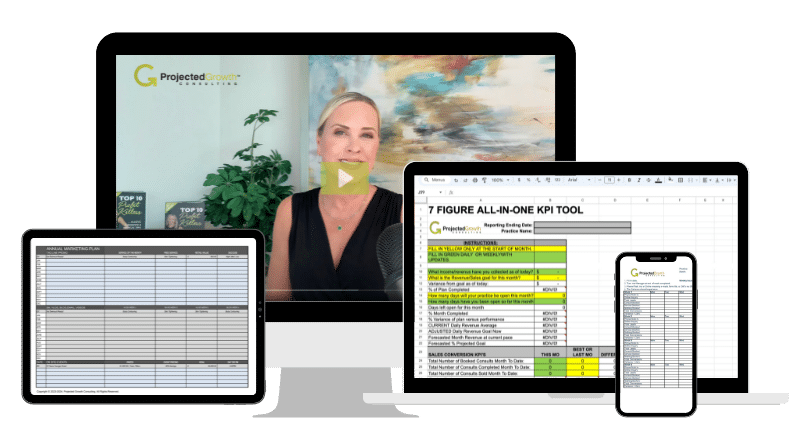
When financial reporting needs attention, your monthly bookkeeping and close process is one place to start. A structured KPI dashboard can also help you see whether revenue, capacity, and retention figures tell a consistent story. These operating tools support better questions; they do not substitute for transaction, legal, or tax advice.
Use the same definitions throughout the packet. A “sale” total may refer to booked services, retail purchases, collected cash, or recognized revenue, and those measures are not interchangeable. Create a short data dictionary for the few metrics you expect to discuss: what is counted, the source system, the reporting period, and who checked it. If two systems disagree, preserve both figures with an explanation rather than choosing the more favorable one without a reconciliation.
Then test the numbers against operating reality. If collections rise while provider hours fall, determine whether prices, mix, prepaid packages, or timing explain the difference. If one provider accounts for a large share of a service line, flag that as a dependency to discuss, not as proof that revenue will continue unchanged. A useful snapshot shows the relationship between money, people, and capacity.
For each unresolved item, write a next action instead of a general warning. “Reconcile gift-card liability” is actionable; “check accounting” is not. Assign the action to a role, such as the bookkeeper, practice manager, owner, or accountant, and set a date before the next discussion. This converts due diligence preparation from an open-ended project into a manageable work list.
Do not upload a full company archive just because someone asks for “everything.” Begin with an index of available materials and mark each item ready, incomplete, or not applicable. Share documents in stages, after you understand the recipient, purpose, confidentiality terms, and secure transfer method.
| Record area | Useful starting documents | What to verify before sharing | Owner action |
|---|---|---|---|
| Financial performance. | Monthly profit-and-loss statements, balance sheets, tax returns, and bank reconciliations. | Periods match; accounts are reconciled; unusual adjustments have support. | Ask the accountant to identify open items and define the reporting period. |
| Revenue and service mix. | Collections by service category, provider, location, and month. | Reports use consistent definitions; packages and memberships are treated consistently. | Reconcile reports to practice and payment systems without sharing patient identifiers. |
| People and owner role. | Organization chart, role descriptions, compensation summary, and owner duty list. | Employment and contractor classifications, agreements, and transition assumptions need professional review. | Describe operational dependencies; keep individual personnel details restricted. |
| Assets and obligations. | Equipment list, leases, debt schedules, vendor contracts, and insurance information. | Ownership, liens, assignment or consent terms, expiration dates, and outstanding balances. | Flag documents requiring landlord, lender, attorney, or other counterparty review. |
| Compliance and governance. | Licenses, entity documents, policies, and relevant professional or management agreements. | Requirements depend on the practice structure and jurisdiction; do not treat a checklist as legal clearance. | Ask qualified counsel what must be reviewed for your specific ownership and service model. |
Keep the materials in a controlled folder with a document index, version dates, and access limited to people who need them. Remove patient identifiers and avoid sending protected information unless your counsel has established a compliant process and a legitimate need. A broker’s request is not, by itself, a reason to disclose sensitive records. For a general starting point on federal health-information privacy, review the U.S. Department of Health and Human Services resources and have counsel apply the rules to your practice and proposed disclosure.
Organize the files so you can answer a specific request without exposing unrelated information. Give files clear names that include the period and version, such as “P-and-L_2025_final” or “Lease_Location-A_signed.” Avoid names such as “latest,” which can leave several conflicting copies in circulation. Keep a simple access log with the date, recipient, document group, and reason for sharing. If someone requests a replacement file, note which version it replaces and whether the earlier copy should be removed from the shared workspace.
Use staged access rather than an all-at-once upload. At the first stage, you may discuss broad business characteristics without documents. At a later stage, a limited set of summarized financial information may help assess fit. More sensitive records should wait until the recipient, purpose, confidentiality agreement, permissions, and transfer controls are clear. The exact stages depend on your advisers and transaction context; the point is to make each disclosure deliberate and traceable.
Remember that a document index is not a claim that every record is complete. Mark the status accurately: available, needs reconciliation, awaiting signature, or not located. If an agreement is missing, do not quietly substitute an email summary and treat it as equivalent. Record the gap, identify who can obtain the signed version, and ask counsel whether the missing item affects a decision.

Use the first discussion to evaluate the process, not just the person’s confidence or network. Ask for examples of experience with medical practices that resemble yours in service mix, location count, ownership structure, and operating complexity. Ask what role the broker would play from preparation through closing, which services are separate, and who would handle specialized legal, tax, or clinical questions.
Ask for the answers in writing where they concern fees, scope, confidentiality, exclusivity, and termination. Have an attorney review any agreement before signing. A broker can explain their own process, but the owner should not treat a conversation as a substitute for independent legal, tax, or financial advice.
Do not confuse a large buyer list with a good fit. Your question is whether the broker can explain a disciplined process for your specific situation, including how they will qualify interest, communicate with you, and handle a buyer who wants more information. If the answers remain vague, pause before sharing more.
Listen for clarity about who does what. If the broker says they will “handle the transaction,” ask where their role starts and ends: preparing financial materials, coordinating buyer inquiries, reviewing offers, negotiating business terms, or managing closing steps. Ask which tasks remain yours and which require separate professionals. A service description should let you distinguish included work from work that carries a separate fee or responsibility.
Test the proposed method with a small, concrete scenario. For instance, ask how the broker would approach a practice where one location has a different lease timeline or where the owner remains the key provider. You are not asking for a free valuation on the call. You are checking whether the person identifies the information needed, the uncertainties, and the professionals who must weigh in before a conclusion.
Compare written terms, not only introductory conversations. Put the proposed fee basis, exclusivity period, termination rights, tail provisions, expenses, confidentiality obligations, and services into a side-by-side review with your attorney. Ask the broker to explain any term you do not understand in plain language, then rely on counsel for legal interpretation. Do not treat a verbal summary as a substitute for the agreement you would sign.
Take notes on how the broker responds to boundaries. A professional should be able to explain why a document is needed and whether a summary can answer the question at this stage. If someone dismisses reasonable questions about confidentiality or urges you to share patient-level information without a clear, reviewed process, stop and seek advice before proceeding.
After the call, write a short decision note while the details are fresh. Capture what the broker said they would do, what they need from you, what remains unverified, and what you agreed not to do yet. Separate statements of fact from estimates and opinions. If a claim matters to your decision, ask for its assumptions or source in writing.
Then choose one next step, not a bundle of automatic commitments. You might request a sample engagement agreement, ask your accountant to reconcile a reporting period, have counsel review confidentiality terms, or schedule a second meeting with a defined agenda. Give each task an owner and deadline. Revisit the owner brief when new information changes your goals or constraints.
Use a decision gate before moving to the next stage. A practical gate might require that you have clarified your personal objectives, identified who can approve disclosure, reviewed the engagement terms with counsel, and resolved the specific records needed for the next conversation. Write down what “ready” means for this decision. Otherwise, the process can advance simply because the next email arrives, not because you have answered the questions that matter.
This is where the method protects leverage: you keep the option to explore without presenting incomplete numbers as settled facts or agreeing to terms you have not reviewed. If you are still deciding whether to sell, your alternatives can include improving reporting, reducing owner dependence, strengthening operations, or preparing for a future sale. A med spa exit-planning review can help frame readiness work; a business valuation guide explains why evidence and earnings quality matter to a valuation discussion.
Readiness is not just a binder. It is the ability to explain how the practice earns money, where decisions and relationships depend on the owner, which records support the explanation, and what would need to change for a transaction to work. An operations audit or a clear operating system may help identify dependencies that financial statements alone do not reveal. If you want to discuss those business questions, Projected Growth Consulting’s company information describes its work serving medical practices since 2011, including more than 6,000 practices served; learn about its med spa consulting services.
Owners who want to strengthen operations before choosing a transaction path can also use a consistent operating framework. Kelly Smith’s Projected Growth Practice OS and the Growth Hub subscription/membership model are examples named by Projected Growth Consulting; evaluate whether these or other resources fit the specific work your practice needs. Do not confuse an operating improvement plan with a broker engagement: one addresses how the practice runs, while the other addresses transaction representation and process.
Make the next step measurable. For example, if your unresolved question is whether the owner’s schedule can be transferred to a clinical lead, document current duties, identify which decisions only the owner makes, and assign a manager to test a handoff for a defined period. If the problem is financial confidence, agree on the reporting period, close outstanding reconciliations, and revisit the snapshot once the evidence is complete. These are operating improvements with value even if you decide not to sell.
One useful credibility check is whether your story is consistent across sources. The practice description, financial summaries, service mix, team chart, and owner’s role should not contradict one another. If a dashboard reports one collection figure while the accounting close reports another, label the difference and resolve it before presenting a single result. Projected Growth Consulting reports serving more than 6,000 medical practices since 2011; that company-reported figure gives context about its consulting work, but it is not a benchmark for your practice or evidence of a broker’s transaction record. Review the firm’s published proof and resources directly when assessing the consulting support you may want.
Book a call to discuss your practice goals
You can use an introductory conversation to learn about a broker’s process, but first decide what you are willing to discuss and share. Prepare your owner brief, avoid presenting estimates as verified results, and review any confidentiality or engagement agreement with qualified counsel before signing.
Avoid sending patient-identifiable information, unrestricted access to financial systems, or a large set of sensitive records before you understand the purpose, recipient, confidentiality protections, and secure transfer process. Start with a high-level snapshot and a document index.
Not necessarily. You can ask how a broker develops an initial view and what evidence would be needed, without treating an early estimate as a formal valuation. Consult an independent valuation or transaction professional if you need a substantiated value for a decision.
Say which periods are reconciled and which are incomplete. Assign someone to close the gaps before you rely on the figures, and use the delay to review collections, expense classifications, and owner-related items with your accountant.
A broker can describe their process, but legal and tax consequences depend on your facts and applicable rules. Ask an attorney and tax professional to review agreements, transaction structure, and tax questions before making commitments.
Preparing before the introduction does not commit you to a sale; it gives you a clearer basis for deciding what to learn, what to share, and what to do next.

Written by
Founder & CEO, Projected Growth Consulting
Kelly Smith is a med spa business consultant with 20+ years of industry experience and the founder of Projected Growth Consulting. A former 7-figure med spa owner, published author of 5 books, and international speaker, Kelly has helped 6,000+ practices generate over $250 million in additional revenue through proven growth strategies.