A promising consultation can disappear from your calendar for reasons that have nothing to do with the quality of your treatment plan. The prospect gets busy, worries about cost, or simply needs more time. The right med spa follow up scripts give your team a confident way to continue the conversation without sounding pushy. They also turn follow-up from an occasional task into a measurable sales process.
Schedule a consultation with Projected Growth Consulting to build a follow-up system your team can use consistently.
This guide gives med spa owners and front desk leaders practical language for unsold consultations, no-shows, and dormant leads. Each script has a clear purpose, but your team should still use the details from the client’s consultation. A useful follow-up sounds personal because it is personal.
A follow-up system defines who contacts each lead, when the contact happens, which channel the team uses, and what the next action should be. Scripts support that system by giving staff a strong starting point, while tracking reveals which conversations lead to bookings.
Without a system, follow-up depends on memory. A coordinator may send one text after a consultation, then stop because a new client walks in or the phone rings. The lead may still be interested, but the practice has no scheduled next step. Over time, those missed conversations become a costly source of lost revenue.
Start by assigning one owner to every open opportunity. The owner could be the provider who completed the consultation, a patient coordinator, or a trained front desk team member. The important point is accountability. The lead should never sit in a shared inbox with everyone assuming someone else will respond.
Your process should also define a contact cadence. A simple cadence for an unsold consultation could include a same-day thank-you, a question-focused message two days later, a value-building call after one week, and a final check-in after two weeks. A no-show needs faster action because the original appointment intent is still fresh. A dormant lead needs a relevant reason to reconnect rather than a generic reminder.
An effective follow-up message should remind the prospect of the specific goal discussed, address the most likely barrier, and offer one easy next step. Keep the message concise, conversational, and useful. The goal is to restart a real conversation, not to send a generic sales announcement.
Use consultation notes before you write. If the client wanted to soften forehead lines before an upcoming reunion but needed to check her schedule, mention the reunion and offer two appointment windows. If she was unsure about downtime, answer that concern using only guidance approved by the treating provider. Specificity shows that your team listened.
A useful structure is: personal context, relevant value, and a simple question. For example: “Hi Sarah, it was great meeting you yesterday and hearing about your goals for your July reunion. Dr. Lee recommended starting with the treatment plan we discussed so you have time to see your results before the event. Would Tuesday afternoon or Thursday morning work better for your appointment?”
That message feels complete because it connects the recommendation to Sarah’s stated goal and makes the response easy. It does not rely on a vague “just checking in” line. It also avoids pressure, discounts, or treatment claims that were not discussed during the consultation.

Unsold consultation scripts should reconnect the recommended treatment with the prospect’s stated goal, then invite a small next step. The team should not immediately lead with a discount. First identify the real barrier, such as timing, uncertainty, budget, or the need to speak with a partner.
Send the first message on the same day while the conversation is still familiar. Your coordinator can write: “Hi Danielle, thank you for meeting with us today. We enjoyed learning about your goal of improving skin texture before your fall photos. I am sending the aftercare overview we discussed. What questions came up after you left?”
This script opens the door without assuming the reason Danielle did not book. Her response may reveal that she needs more information, a different appointment time, or help understanding the treatment sequence.
When there has been no reply, send a short question based on the consultation: “Hi Danielle, I wanted to follow up on the skin plan Dr. Patel created for you. You mentioned that downtime was your biggest concern. Would it help if I reviewed the expected recovery timeline with you by phone?”
After one week, make booking easy: “Hi Danielle, I have two appointment options available for the first treatment in your plan: Wednesday at 2:00 p.m. or Friday at 10:30 a.m. Would either time fit your schedule, or would you prefer that I look at the following week?”
These messages work because each one has a different purpose. The first invites questions, the second addresses the known concern, and the third offers a direct path to book. For a broader approach to managing open opportunities, review PGC’s guide to med spa funnels that convert more leads.
A no-show follow-up should be prompt, gracious, and focused on rescheduling. Contact the prospect soon after the missed appointment, avoid language that sounds punitive, and give two concrete appointment options. If the person does not respond, use a short multi-channel cadence before closing the lead.
Your first text can be simple: “Hi Marcus, we missed you at your consultation today and wanted to make sure everything is okay. I can help you find another time. We currently have Tuesday at 4:00 p.m. and Thursday at 11:00 a.m. available. Would either work for you?”
If there is no response by the next business day, call and leave a brief voicemail: “Hi Marcus, this is Ava from Bright Aesthetics. I am following up because we missed you yesterday. We would still be happy to help with the facial redness concerns you shared. Please call or text us when you are ready to choose a new time.”
A final message several days later can leave the door open: “Hi Marcus, I am closing the loop on your consultation request for now so we do not keep filling your inbox. If reducing facial redness is still a priority, reply here and I will help you schedule a new consultation.”
The last message respects the prospect’s attention and gives the team a clear point at which to pause outreach. It also prevents the lead list from filling with opportunities that have no defined status. See the guide to building a med spa operations manual for more ways to create a consistent process.
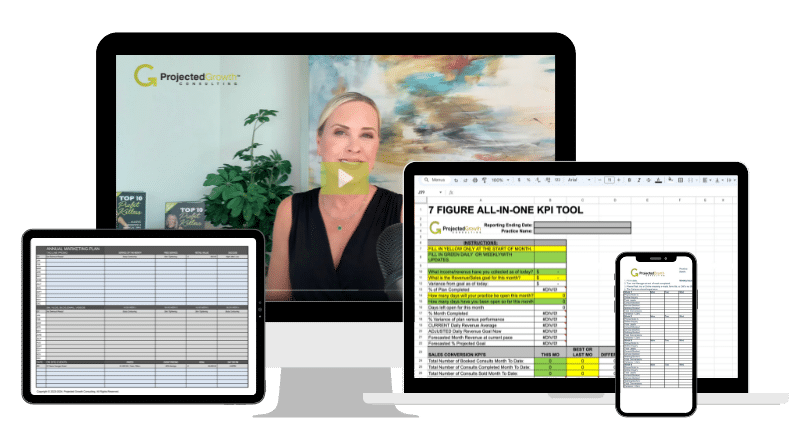
Download the Med Spa Growth Essentials Bundle to strengthen the tracking behind your sales and follow-up process.
Dormant-lead outreach works best when the practice has a relevant reason to reconnect. Reference the prospect’s original interest, share a useful update, and ask whether the goal is still a priority. Do not pretend the relationship is recent, and do not send the same promotional message to every lead.
Start by segmenting dormant leads by original interest and age. A person who asked about a membership three months ago needs a different conversation from someone who requested a body treatment consultation last year. Segmentation helps your team choose a message that is relevant and credible.
“Hi Elena, you met with our team earlier this year to discuss improving sun damage and uneven tone. I am checking in because you wanted to revisit the plan after summer travel. Is that goal still on your list for this season? If so, I can help you schedule a fresh consultation.”
“Hi Elena, when we last spoke, you had questions about the recommended treatment sequence and expected downtime. Our provider recently created a short guide that answers those questions. Would you like me to send it?”
“Hi Elena, I do not want to send updates that are not useful to you. Would you like us to keep you informed about skin-rejuvenation consultations, or should I close your request for now?”
These scripts help the lead make a decision without pressure. A clear “not now” is useful information because it lets your team focus on people who are ready to talk.
Track contact attempts, response rate, consultation booking rate, treatment conversion rate, time to first follow-up, and the reason each lead does not move forward. Review the metrics by lead source and team member so coaching focuses on specific process gaps rather than assumptions.
A tracker does not need to be complicated, but every open lead should have a status and a next action. Agree on consistent definitions before comparing results. For example, decide whether a treatment conversion counts when the deposit is paid, when the appointment is booked, or when the treatment is completed.
| Metric | What it reveals | Action to consider |
|---|---|---|
| Time to first follow-up | How quickly the team reconnects | Set same-day task rules |
| Response rate | Whether messages start conversations | Test timing and specificity |
| Consultation booking rate | How many leads schedule | Review the offered next step |
| Treatment conversion rate | How many consultations become sales | Coach discovery and recommendation skills |
| Lost-lead reason | Why prospects pause or decline | Improve process around common barriers |
Review the dashboard weekly with the team. Look for one constraint at a time. If response rates are low, improve the message and timing. If response rates are strong but booking rates are weak, coach the transition from conversation to appointment. PGC’s med spa KPI dashboard guide explains how to connect sales activity to operational performance.
Coach the purpose and structure of each script rather than demanding word-for-word delivery. Team members should practice using real consultation details, asking one clear question, and responding to common objections. Regular role-play builds confidence while call and message reviews reveal specific coaching opportunities.
Begin with a small script library for the situations your team handles most often. Explain why each line is there. The personal context proves the team listened, the value statement makes the contact useful, and the question creates a next step. When staff understand the purpose, they can adapt the language without losing the strategy.
Use weekly role-play with realistic scenarios. One person plays a prospect who is interested but worried about downtime. Another plays a no-show who feels embarrassed. A third plays a dormant lead who is no longer ready. After each practice conversation, discuss whether the coordinator identified the barrier, stayed accurate, and asked for an appropriate next action.
Consistency matters more than memorization. A confident coordinator who listens and records the next step will outperform a team member who recites a polished script but misses what the prospect actually needs.
Med spa leaders often ask how quickly to follow up, how many contacts to make, which channel to use, and whether scripts should be delivered word for word. The best answer depends on the prospect’s situation, communication preference, and the practice’s documented follow-up process.
Send a personalized thank-you on the same day, then schedule the next contact based on the barrier or decision timeline discussed. The message should reference the consultation and make it easy to ask a question or book.
Use a defined cadence instead of an unlimited series of reminders. A practical sequence may include several purposeful contacts over two weeks, followed by a final permission-based message. Record the outcome, then pause unless the prospect asks to stay informed.
Use the channel the prospect prefers whenever possible. Text is helpful for quick scheduling questions, email can support useful educational information, and phone calls work well when the concern requires a real conversation.
No. Scripts should provide a reliable structure, not replace listening. Staff should personalize each message using accurate consultation notes and approved treatment information while keeping the purpose and next step clear.
A strong follow-up system turns good consultations into clear next steps. Give every lead an owner, schedule each contact, use specific scripts, and review outcomes weekly. Then coach one behavior at a time so your process improves without overwhelming the team.
Projected Growth Consulting helps med spa owners build practical sales systems that teams can use with confidence. The right process does more than produce better messages. It creates accountability, improves the client experience, and shows leaders where opportunities are being won or lost.
Schedule your consultation with Projected Growth Consulting to create a follow-up process built around your practice, team, and growth goals.
Written by
Founder & CEO, Projected Growth Consulting
Kelly Smith is a med spa business consultant with 20+ years of industry experience and the founder of Projected Growth Consulting. A former 7-figure med spa owner, published author of 5 books, and international speaker, Kelly has helped 6,000+ practices generate over $250 million in additional revenue through proven growth strategies.