If your marketing report celebrates leads, clicks, and a busier phone, you may still have no idea which campaigns produce profitable patients. A med spa can spend thousands across Google, Meta, referrals, and email while judging performance by activity instead of collected revenue. That is how budget quietly leaks.
Schedule a free success call with Projected Growth Consulting to build a clearer growth system.
To measure med spa marketing roi by channel, connect each campaign to booked consultations, completed treatments, collected revenue, and the cost required to generate those outcomes. Then compare revenue and profit by channel, not lead volume alone.
That discipline matters because industry research suggests 78% of med spas cannot attribute revenue to a specific channel (PatientPop Industry Report). Before you calculate a return, you need to separate useful performance signals from vanity metrics that make weak campaigns look productive.
Here is the uncomfortable reality: 78% of med spas cannot attribute revenue to a specific marketing channel. According to the PatientPop Industry Report as cited by Pronk Med Spa Marketing. That means an owner can be spending thousands every month without knowing whether Google, Meta, referrals, email, or another channel produced the patients who actually generated revenue.
The problem gets worse when reporting stops at lead volume. Consider a straightforward example: you spend $5,000 on Google Ads and receive 120 leads. The reported cost per lead is about $42. That number sounds efficient until you follow the funnel and discover that only 34 leads booked a consultation. Your real cost per booked consultation is $147, not $42. If some of those consultations never show or never purchase a treatment, the true acquisition cost is higher still. The underlying example and attribution warning are documented here.
Many practices pour $5,000, $10,000, or $15,000 per month into a combination of channels and judge performance by whether the phone seems busier than last month. That is not channel measurement. It is a feeling, and feelings do not tell you which source produced a booked consultation, a completed procedure, or your highest-value patient.
A channel can generate inexpensive leads while consuming your team’s follow-up time and producing few completed treatments. Another channel may generate fewer inquiries but consistently attract patients for higher-margin procedures. If both are judged by clicks, impressions, or raw leads, the weaker channel can look like the winner while the profitable channel gets underfunded.
Real med spa marketing ROI by channel requires connecting spend to outcomes: lead, contacted lead, booked consultation, attended consultation, completed procedure, and collected revenue. The first useful question is not, “How many leads did this campaign produce?” It is, “What did this channel cost to acquire patients. And what revenue did those patients create?” That distinction is the difference between reporting activity and managing a practice.
Without that visibility, you cannot confidently cut waste, protect effective campaigns, or plan hiring and capacity around actual demand. Channel attribution is not a reporting extra. It is a survival metric for a practice operating on finite cash, staff time, and appointment capacity.
The Attribution Matrix connects four points that are often reported separately: campaign spend, lead source, booked treatment, and collected revenue. The goal is not to produce a prettier traffic report. It is to show which campaigns create profitable procedures, so you can stop protecting channels that generate activity but fail to generate cash.
Build the measurement layer in GA4 before you judge performance. Confirm the property and website data stream, then enable enhanced measurement so GA4 can capture meaningful on-site interactions without relying on manual tracking for every basic action. Next, configure conversion events around the patient journey, including appointment bookings and treatment page views. Those events form the foundation of med spa marketing ROI by channel because they connect an anonymous visit to a measurable expression of interest. See the implementation guidance behind these event categories in this GA4 tracking reference.
Do not stop at a generic “form submission” event. Create treatment-specific events when the practice can support them, such as botox_booking, laser_booking, or body_contouring_booking. Treatment-specific conversion tracking gives you granular performance data across service lines, which matters when one procedure has a much higher value or close rate than another. A campaign that produces fewer bookings may still be the stronger investment if it produces more valuable completed treatments.
Use UTM parameters consistently across paid social, search, email, and partnerships. A practical naming convention is utm_source for the platform, utm_medium for the channel type, utm_campaign for the offer or treatment, and utm_content for the creative or audience. Keep capitalization, punctuation, and treatment names standardized. If one campaign uses Meta and another uses meta, your reports can split one channel into two false categories.
Finally, match the GA4 record to your front-desk outcome: booked, showed, completed, and revenue collected. Review those outcomes in a med spa KPI dashboard rather than evaluating leads in isolation. Precise attribution lets you move budget from low-ROI channels to high-value channels and procedures, instead of guessing based on clicks or a busier-looking phone.
Sources: GA4 conversion event and attribution guidance.
Channel performance is not interchangeable. A low lead cost can still produce weak economics if those leads do not book, show, or return for another treatment. Compare channels using cost per booked patient, completed-procedure revenue, and downstream retention, not impressions or raw inquiries.
| Channel | Typical lead or acquisition cost | What it tends to return | Best use |
|---|---|---|---|
| Google Ads | CPL: $40-$80+ Cost per booked consultation: $100-$250 |
Fewer but more immediate inquiries from people actively searching for a treatment or provider. Results depend heavily on landing-page and front-desk conversion. | High-intent demand capture |
| Meta and Instagram | CPL: $15-$85 Cost per booked appointment: $45-$200 |
More variable lead quality. Well-built forms, strong creative, and precise targeting can produce $15-$35 leads, while broad targeting with generic creative can reach $55-$85 per lead. | Brand awareness and demand creation |
| Usually low incremental CPL | Existing-patient reactivation, education, reminders, and repeat treatment revenue. Its strongest return often appears in lifetime value rather than first-booking cost. | Retention and rebooking | |
| Direct mail | Typically higher CPL than digital channels | Trackable local response when the offer, geography, and audience are tightly defined. It can reach households that are not actively engaging with your digital content. | Local awareness and targeted promotions |
| SEO and content | Slower ramp; no dependable short-term CPL benchmark | Compounding visibility and qualified organic demand. The return usually takes longer to materialize but can support higher lifetime value when content matches treatment intent. | Durable acquisition and authority |
These ranges are decision aids, not promises. Meta campaign CPL commonly falls between $15 and $85, depending on targeting precision and creative quality, while reported cost per booked appointment ranges from $45 to $250. Source benchmarks show why the booked appointment matters more than the lead alone.
Speed also changes the economics. Practices that respond within five minutes of a lead submission book an estimated 35% to 50% of leads. Build that response time into the channel comparison instead of blaming a campaign for a front-desk delay. The academic review of social media in aesthetic medicine also found that platform use varies by patient demographics: younger patients tend to use Instagram. Snapchat, and TikTok, while older populations are more likely to use Facebook and YouTube for aesthetic-service research. Read the academic review before assigning one audience profile to every social channel.
Measure each row through the same funnel: lead, booked appointment, completed procedure, revenue, and repeat visit. That is how you determine which channel is actually profitable for your practice.
Cost per lead is not the same as profitable acquisition. A channel that produces leads cheaply can still underperform if those patients book low-value treatments once and never return. To evaluate med spa marketing ROI by channel, compare the customer acquisition cost (CAC) with the revenue each channel’s patients generate over time.
Estimate patient lifetime value (LTV) using three inputs: average treatment value, number of visits, and retention or rebooking behavior. Industry benchmarks place patient LTV around $2,500 to $5,400, with average treatment values between $350 and $800 and rebooking rates of roughly 50% to 70%. Treat these as planning ranges, not promises. Your own patient records should replace them as soon as you have enough clean data.
A practical formula is:
Patient LTV = average treatment value x expected number of visits
For example, a $500 average treatment value across six visits produces a projected $3,000 LTV. If your channel brings in patients who choose higher-value treatments or rebook more consistently, their LTV may justify a higher acquisition cost.
For each source, divide total channel spend by the number of new patients who actually completed a visit. Do not stop at inquiries, form fills, or booked consultations. A channel with a $75 cost per lead may be more profitable than one with a $25 cost per lead if its patients show. Purchase more valuable services, and return.
Keep the calculation separate for Google Ads, organic search, Meta, referrals, and any other meaningful source. Your med spa patient acquisition cost should be tied to completed-patient revenue, not a blended average that hides weak channels.
Apply this formula to each channel:
Channel ROI = (Revenue from patients via channel – Channel spend) / Channel spend x 100
Suppose SEO brings 20 patients who generate $60,000 in projected LTV from $10,000 in content and optimization costs. Its channel ROI is 500%. Social traffic may convert faster, but if 30 patients generate only $45,000 from $12,000 in spend, its ROI is 275%.
Organic patients often take longer to convert because they research before booking. That delay is not failure. Measure cohorts over 90, 180, and 365 days, then compare completed treatments, rebooking, and LTV. The winning channel is the one that creates durable patient value, not the one that makes the dashboard look busiest this week.
A good med spa marketing ROI target is often 400% to 600% for an effective campaign, but that range is a planning benchmark, not a universal promise. Your realistic target depends on practice size, treatment margins, patient lifetime value, channel maturity, and how reliably your team converts inquiries into completed procedures.
ROAS, or return on ad spend, compares revenue attributed to advertising with the advertising dollars spent. If you spend $1,000 on paid search and attribute $5,000 in treatment revenue to it, your ROAS is 5:1. True ROI is stricter. It accounts for the ad spend plus agency fees, creative production, software, promotions, staff time, and other campaign costs. A campaign can show impressive ROAS while producing weak or negative profit after those costs.
Use the 400% to 600% benchmark as a signal to investigate, then calculate profitability using booked and completed treatment revenue. Do not call a campaign successful because it generated inexpensive leads. Earlier research found that a $5,000 campaign producing 120 leads but only 34 booked and showed consultations had a $147 cost per booked consultation. Not a $42 cost per lead (source).
Paid search can produce faster demand capture, while content marketing usually takes longer to mature. A practical planning range for strong med spa content is roughly 2x to 4x ROI. With the advantage that useful pages can continue attracting prospective patients after the initial investment. Social media may also support engagement and practice development. But a systematic review of social media in aesthetic medicine emphasizes the need to quantify which platforms create meaningful practice value, rather than treating engagement as revenue (PMC meta-analysis).
Track each channel through consultation, treatment, and repeat-visit revenue. Then review results monthly and move budget toward the channels producing profitable procedures, not merely the highest lead volume.
If your practice cannot connect a lead to a completed treatment and the revenue that follows, your marketing report is incomplete. Build the tracking system around the full patient journey, not just clicks or form fills.
Install GA4 with enhanced measurement enabled, then create events for the actions that matter: treatment page views, consultation requests, appointment bookings, and completed booking confirmations. Configure treatment-specific events where possible, such as botox_consultation or laser_booking, rather than grouping every inquiry into one generic conversion. GA4 conversion events such as appointment bookings and treatment page views are the foundation of med spa marketing analytics, according to this GA4 tracking guidance.
Use UTM parameters on every paid ad, email, influencer link, and partner campaign. Keep one naming convention: source-medium-campaign-treatment. For example, instagram-paid-social-summer-botox is more useful than a tag such as promo2. Lock the convention in a shared document and prevent agencies or staff from creating variations like “IG,” “Instagram,” and “instagram.com.” Consistent UTMs are what make channel and treatment reporting comparable.
Pass the first-touch source, latest campaign, booked treatment, completed procedure, and collected revenue into your practice management software or CRM. The source must survive beyond the initial form submission. Otherwise, you know where inquiries came from but not which channel produced paying patients or repeat treatment revenue.
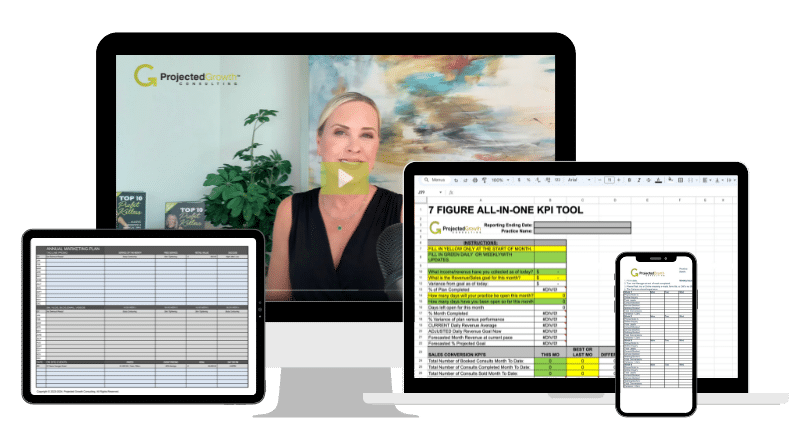
Create a spreadsheet with one row per channel and treatment each month. Track spend, leads, consultations booked, consultations completed, procedures completed, collected revenue, and refunds. A med spa KPI dashboard can provide the broader operating context, but this scorecard must preserve channel-level detail.
Calculate ROI as (attributed revenue - marketing spend) / marketing spend x 100. Report a six-month window for immediate performance and a 12-month window for repeat treatments and rebookings. Comparing both windows prevents you from cutting a channel that acquires fewer first visits but produces more profitable long-term patients. Precise attribution lets you move budget from low-ROI channels toward channels generating higher-value procedures.
Subtract total marketing and campaign costs from the revenue generated by booked and completed treatments, then divide the result by total marketing costs. Track revenue by source, campaign, treatment, and patient status. A lead is not revenue, so include booking, show, treatment, and rebooking data before judging performance.
There is no universal target because treatment margins, patient value, follow-up speed, and operating costs vary. Set a practice-specific baseline, then compare channels using completed-treatment revenue and contribution margin. A campaign producing cheap leads but few attended appointments is not strong ROI, even if its dashboard looks efficient.
Use consistent UTM parameters, unique landing pages or tracking numbers where practical, and a CRM source field that remains attached from inquiry through treatment. Configure GA4 events for appointment bookings and treatment page views, then reconcile those events with your scheduling and payment records. Treatment-specific events provide more useful detail than a single generic form conversion (https://prospelle.com/med-spa-marketing-roi-tracking/).
The patient journey often crosses several touchpoints, while phone calls, walk-ins, referrals, repeat visits, and incomplete CRM records can break attribution. The problem is common: one industry report cited by Pronk Med Spa Marketing says approximately 78% of med spas cannot attribute revenue to a specific channel (https://pronkmedspamarketing.com/blog/med-spa-marketing-roi/). Use one source-of-truth process and review missing-source records every week.
A channel-level tracking system gives you a clearer view of which campaigns produce booked revenue, not just leads or activity. Schedule a free success call with Projected Growth Consulting to build a practical system around your practice.

Written by
Founder & CEO, Projected Growth Consulting
Kelly Smith is a med spa business consultant with 20+ years of industry experience and the founder of Projected Growth Consulting. A former 7-figure med spa owner, published author of 5 books, and international speaker, Kelly has helped 6,000+ practices generate over $250 million in additional revenue through proven growth strategies.