As a practice owner, you’re not just building a job for yourself; you’re building a valuable asset. A strong brand and a full appointment book are great, but a truly scalable and sellable business runs on predictable systems. This is where digital marketing for medical spas becomes your most powerful tool for creating long-term enterprise value. It’s the engine that generates consistent leads, nurtures client relationships, and establishes your authority in the market, all while you focus on leading your team. This guide breaks down how to build a marketing machine that works for you, turning your efforts into a measurable asset that drives growth. For owners who need the marketing plan tied back to sales, staffing, and profitability, our med spa consulting guide explains how those pieces work together. Use the medical spa marketing budget template when you are ready to map spend to ROI.
Think of digital marketing as the system you use to connect with current and future patients online. It’s how you show up when someone searches for “Botox near me,” how you build trust with before-and-after photos on Instagram, and how you remind a client about an upcoming promotion. It’s a powerful tool that lets you reach your target audience where they already spend their time: on their phones and computers.
Unlike throwing money at a billboard and hoping for the best, digital marketing is a measurable, strategic approach to growth. It allows you to guide potential patients from the moment they first hear about you all the way to their first appointment and beyond. When done right, it’s not just about getting more followers; it’s about creating a predictable flow of qualified leads, building a loyal community, and establishing your practice as the go-to authority in your area. This is a core part of building a scalable and sellable business, moving you from reactive marketing to a disciplined engine for growth. It’s the difference between a practice that relies on luck and one that operates with a clear plan for attracting and retaining high-value clients.
A strong digital marketing strategy is more than just posting on social media. It’s a complete system with several moving parts working together to grow your practice. The main components include a user-friendly website that works great on mobile, search engine optimization (SEO) to help you show up on Google, and content marketing to educate and build trust. It also includes email marketing to nurture relationships with your client list, social media marketing to showcase your work, and paid advertising to reach a targeted audience quickly. Each piece plays a critical role in attracting and retaining clients.
The medical spa industry is growing incredibly fast, which means competition is getting tougher every day. Relying on word-of-mouth or a local magazine ad just isn’t enough to stand out anymore. Today’s patients are researchers. Before they book, they look for reviews, compare results, and check out your online presence. They expect the convenience of digital interaction, from online booking to quick answers on social media. An effective digital marketing campaign is essential for improving patient engagement, increasing your online visibility, and ultimately, driving more appointment reservations. It helps you build a modern practice that meets clients where they are.
With so many marketing options available, it’s easy to feel pulled in a dozen different directions. Instead of trying to do everything at once, it’s better to focus your energy on a few key areas that deliver the most impact for medspas. A strong digital marketing plan doesn’t have to be complicated, it just needs to be consistent. Think of your marketing as an ecosystem where each part supports the others. Your content gives you something valuable to share on social media and in emails. Your local search efforts bring new people to your website, where your content convinces them to sign up for your email list. It all works together.
Let’s walk through the four pillars that will give you the best return on your time and investment: creating high-value content, building relationships with email, attracting local patients with search optimization, and connecting with clients on social media. Mastering these areas will create a reliable system for attracting new clients and keeping your current ones coming back.
Your content is the foundation of your digital marketing. Its job is to build trust and guide potential clients toward booking an appointment. An effective content strategy will support your search engine optimization (SEO) and help you connect with people as they look for answers to questions about the services you offer. Think about the questions you hear every day in consultations. Turn those answers into blog posts, videos, or social media updates. This positions you as a trusted expert and provides genuine value, which is far more effective than a hard sell. By creating helpful resources, you build a library of assets that works for you around the clock, attracting and educating your ideal clients.
While social media is great for reach, email is where you build lasting relationships. Email marketing is one of the most powerful tools for building client relationships and driving retention in your medspa. It’s your direct line to an audience that has already expressed interest in your practice. Use email to send out monthly newsletters with practice updates, announce special promotions, and share educational content that keeps your clients engaged. You can also set up automated emails to welcome new subscribers or follow up after an appointment. This consistent communication builds loyalty and keeps your practice top of mind, encouraging repeat business and turning one-time visitors into lifelong clients.
For a brick-and-mortar business like a medspa, local search engine optimization (SEO) is non-negotiable. You need to appear when potential clients in your area search for services you provide. Optimizing for local SEO helps attract more local clients to your medical spa. This involves setting up your Google Business Profile, gathering positive reviews, and ensuring your website is optimized with location-specific keywords. A high-converting website is essential for turning those searchers into paying clients. When someone finds you online, your site should make it easy for them to learn about your services and book a consultation, creating a smooth path from discovery to appointment.
Social media is your opportunity to showcase your brand’s personality and build a vibrant community. It’s less about direct selling and more about connection. Use platforms like Instagram and Facebook to share patient testimonials, post before-and-after photos (with consent, of course), and give a behind-the-scenes look at your team and practice. These types of digital marketing campaigns build social proof and humanize your brand. Engaging with comments and messages shows you care and are accessible. A strong social media presence turns followers into fans and fans into clients, all while building a brand that people are excited to be a part of.
Social media is more than just a place to post promotions; it’s where you build relationships, establish your authority, and give potential clients a reason to trust you before they even walk through your door. A strong social media presence makes your practice feel more human and approachable, turning followers into loyal patients. But showing up consistently requires a clear plan. Instead of posting randomly, focus your efforts on the platforms where your ideal clients spend their time. By creating valuable content that educates and engages, you can build a community that not only supports your business but helps it grow.
Think of Instagram as your practice’s visual portfolio. It’s the perfect platform to highlight the incredible results you deliver for your patients. Use high-quality, compliant before-and-after photos and videos to showcase your team’s expertise. Reels are fantastic for showing behind-the-scenes clips of a treatment or a “day in the life” at your spa, which helps demystify your services. You can also create educational carousels that share skincare tips or post-treatment care instructions. This kind of content positions you as a trusted expert. For those ready to build a comprehensive strategy, our Social Media for the Elective Industry Course offers a complete playbook.
While Instagram is for showcasing, Facebook is for community building. This is where you can foster deeper connections with your audience. Make it a point to engage with your audience by responding to comments and messages promptly. Consider creating a private Facebook group for your most loyal patients, offering them exclusive content, early access to promotions, and a space to connect with each other. Hosting live Q&A sessions with your providers is another great way to build trust and answer common questions in real time. When you treat your Facebook page like a conversation, you turn followers into a supportive community that champions your practice.
Don’t be intimidated by TikTok. This platform is your opportunity to connect with a wider audience by showing a more authentic and creative side of your practice. The key is to create short, educational, and entertaining videos. You could make a video debunking common myths about a popular treatment, participate in a relevant trend with a medspa twist, or simply introduce your team to make your practice feel more relatable. Because video content on TikTok is so discoverable, it’s a powerful tool for reaching potential clients who may not have found you otherwise.
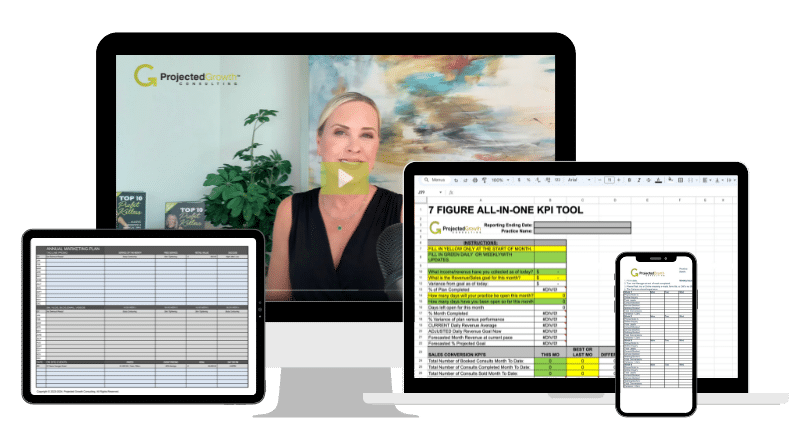
The secret to effective social media is not about being online 24/7; it’s about having a smart and sustainable plan. A content calendar is your best friend here. It helps you map out your posts in advance, ensuring you have a healthy mix of educational content, patient testimonials, and promotional offers. This prevents last-minute scrambling and keeps your messaging consistent. To know what’s actually working, you need to track your performance. Our 7-Figure All-In-One KPI Tracking Tool can help you monitor which posts are driving engagement and bookings, so you can do more of what moves the needle.
Search Engine Optimization, or SEO, is the process of making your website more visible to people searching for your services on Google. Think of it as the digital equivalent of having a beautiful, well-lit storefront on the busiest street in town. When a potential patient searches for “Botox in my city” or “best facial near me,” you want your practice to be one of the first results they see. SEO is what makes that happen. It’s not about trying to trick Google; it’s about clearly communicating who you are, what you do, and why you’re the best choice for patients in your area.
Unlike paid ads, which stop working the moment you stop paying, a strong SEO strategy is a long-term asset that builds on itself over time. It helps you attract a steady stream of high-intent patients, the ones who are actively looking for the exact treatments you offer. By focusing on a few key areas, you can create a powerful system for attracting new patients without having to pay for every single click. We’ll walk through the four core pillars of a successful SEO strategy for your med spa: keywords, page optimization, local search, and technical health.
Keywords are the words and phrases potential patients type into Google when they’re looking for aesthetic services. Your first step is to figure out what those terms are. Start by making a list of all the services you offer, from injectables to laser treatments. Then, put yourself in your ideal patient’s shoes. What would they search for? They might look for “microneedling for acne scars in [Your City]” or “cost of lip fillers near me.”
Once you have a solid list, you can begin to use those keywords on your website. Each service you offer should have its own dedicated page that uses relevant keywords in the headings and text. This helps Google understand exactly what your page is about, making it more likely to show it to someone searching for that specific treatment.
Your website is your digital home base, and it needs to be built for conversions. This means it should be clean, professional, and incredibly easy for a visitor to use. When a potential patient lands on your site, they should immediately understand what you offer and how to take the next step. Make sure your site loads quickly and looks great on a mobile phone, as that’s where most people do their searching.
Each service page should not only describe the treatment but also guide the visitor toward booking an appointment. Use clear calls-to-action like “Book a Free Consultation” or “Schedule Your Appointment Now.” High-quality photos and patient testimonials can also make your pages more effective. A well-designed website builds trust and makes it simple for interested visitors to become paying patients.
As a local business, your most important audience is the people in your immediate area. This is where local SEO comes in. Your goal is to appear in the “map pack,” the box with a map and three business listings that shows up for searches like “med spa near me.” The key to this is your Google Business Profile. This free listing is one of the most powerful marketing tools you have.
Claim your profile and fill out every single section completely. Add high-quality photos of your practice, your team, and your work. List all of your services with descriptions. Most importantly, create a system for consistently getting new patient reviews. A complete and active profile with lots of recent, positive reviews sends a strong signal to Google that you are a reputable and popular choice in your area, helping you improve your local ranking.
Technical SEO sounds intimidating, but it’s really about ensuring your website’s foundation is solid so it can be easily found and understood by search engines. Two of the most important factors are page speed and mobile-friendliness. If your website takes too long to load, visitors will leave before they ever see what you have to offer. Google knows this, so it favors faster websites in its search results.
Similarly, since most local searches happen on a phone, your website must provide a seamless experience on mobile devices. Text should be easy to read, and buttons should be easy to tap. You can use free tools to check your site’s performance and identify any issues. A technically healthy website not only ranks better but also provides a better experience for your patients, building trust from their very first click.
Your online reputation is your digital storefront. Before a potential patient ever steps into your medspa, they’re looking you up online, reading reviews, and deciding if they can trust you with their face and body. Managing your reputation isn’t just about damage control; it’s a proactive strategy for building trust and attracting a steady stream of new clients. A high star rating is a powerful asset, and getting there requires a clear, consistent system.
You can’t just hope for good reviews; you need a system to actively generate them. The best time to ask is right after a positive experience, so build a review request into your post-visit follow-up. An automated text message or email sent a day or two after an appointment makes it incredibly easy for happy clients to share their feedback. Our course on Text Marketing That Converts can show you how to set this up effectively. The key is to make the process seamless. Provide a direct link to your preferred review platform, like Google or RealSelf, so clients can leave a review in just a few clicks without having to search for your page.
Seeing a negative review can feel like a personal attack, but your response is what truly matters. Responding to all feedback, good or bad, shows potential clients that you value every opinion and are committed to providing excellent service. When you get a negative review, take a breath. Respond publicly by acknowledging the client’s experience and thanking them for their feedback. Apologize that their visit didn’t meet expectations and offer to resolve the issue offline. This simple, professional approach demonstrates that you care and can turn a negative situation into a display of your practice’s integrity. It builds more trust than a perfect but silent record ever could.
The easiest way to get more positive reviews is to ask your happiest clients for them. But you can also create an environment where clients feel inspired to share their great results without a direct prompt. Use your social media and email marketing to showcase incredible before-and-after photos (with patient consent, of course) and share educational content that answers common questions. When you build a strong community and consistently provide value, your clients become your biggest fans. Our Social Media for the Elective Industry Course teaches you how to turn your online presence into a platform that not only attracts clients but also encourages them to become advocates for your brand.
A perfect 5.0-star rating can sometimes look less believable than a 4.8-star rating with hundreds of authentic reviews. Transparency is the cornerstone of trust in the aesthetics industry. Don’t be afraid of a few less-than-perfect reviews, especially when you’ve responded to them professionally. It shows you’re a real business that cares about patient outcomes. This transparency should extend to all your marketing. Provide accurate information, set realistic expectations, and use your content to educate your audience. A successful marketing campaign builds trust by being honest and helpful, which ultimately encourages more patients to choose you and share their positive experiences with others.
While building your organic presence through SEO and social media is essential for long-term growth, paid advertising is how you can get immediate traction and a more predictable flow of new patients. Think of it not as an expense, but as a strategic investment in your practice’s growth. When you have a solid paid ad strategy, you create a reliable system for attracting qualified leads, which is a cornerstone of scaling your business. It gives you more control over your lead volume, allowing you to turn the dial up or down based on your capacity and revenue goals. This level of control is what separates a practice that is just getting by from one that is intentionally scaling.
Paid advertising works best when it’s part of a complete marketing system, not just a standalone tactic. You can use ads to capture high-intent searchers on Google, build awareness with your ideal audience on social media, and stay in front of people who have already shown interest in your services. The key is to move beyond simply running ads and start building a structured campaign that you can measure, refine, and rely on. This approach turns your marketing from a guessing game into a data-driven growth engine for your practice. When you know your numbers, you can confidently invest in what works and cut what doesn’t, ensuring every dollar you spend contributes directly to your bottom line.
When a potential patient searches for “Botox in [your city]” or “best facial treatments near me,” you want your practice to be the first one they see. That’s the power of Google Ads. These ads place your med spa at the top of the search results, capturing the attention of people who are actively looking for the exact services you offer. This is different from social media, where you’re interrupting someone’s feed; with Google Ads, you’re providing a solution at the exact moment someone has a problem. Effective digital marketing campaigns for appointments often start right here, turning an active search into a booked consultation.
While Google Ads capture existing demand, social media ads help you create it. Platforms like Instagram and Facebook have powerful targeting tools that let you put your message in front of a highly specific audience. You can target users based on their age, location, interests (like luxury skincare or wellness), and even online behaviors. This is perfect for running awareness campaigns that introduce your practice to people who fit your ideal patient profile but may not be actively searching yet. For example, you can run ads showcasing your new anti-aging treatment specifically to women ages 40 to 60 within a 10-mile radius of your practice. This is how you build a pipeline of future patients and grow your brand’s local presence.
Did you know that most people who visit your website for the first time will leave without booking an appointment? It’s not because they aren’t interested; they just might not be ready to commit. Retargeting is the strategy you use to bring them back. By placing a small piece of code on your website, you can show targeted ads to these past visitors as they browse other sites or scroll through social media. This keeps your practice top-of-mind and gives them a gentle reminder of the services they were considering. A comprehensive med spa digital marketing strategy is a significant investment, and retargeting helps you maximize the return on every dollar you spend driving traffic to your site.
Running ads without a plan is one of the fastest ways to waste money. Before you spend a single dollar, you need to define your budget and know exactly how you’ll measure success. Start by setting a clear monthly ad spend you’re comfortable with. Then, determine what a “conversion” means for you. Is it a submitted contact form, a phone call, or a directly booked appointment? By tracking these conversions, you can calculate your cost per lead and, ultimately, your return on investment (ROI). Using a simple dashboard to monitor your key performance indicators is critical. This is how you make smart, data-backed decisions and ensure your ad spend is actually generating profitable growth for your practice.
Creating content is one thing, but creating content that actually gets clients in the door is another game entirely. Your content strategy should be designed with one primary goal in mind: to build enough trust and confidence that a potential client feels ready to book a consultation. Think of your content as the bridge between a person’s initial curiosity and their final decision to choose your practice. It’s your opportunity to answer their questions, calm their nerves, and showcase your expertise before they even speak to your front desk.
Effective content meets your ideal client where they are, whether they’re just starting to research a treatment or are comparing different providers. It educates, demonstrates results, and builds a personal connection that sets you apart from the competition. When you consistently provide value and prove your credibility, the sales process becomes much smoother. The decision to book with you feels less like a leap of faith and more like the obvious next step. In the following sections, we’ll cover the four key types of content that do this best: educational posts that build trust, before-and-afters that provide proof, videos that engage, and blog posts that attract ready-to-book clients. Mastering these will help you turn your content creation efforts into a reliable system for practice growth.
Your potential clients are online searching for answers. They want to know what a treatment feels like, what the downtime is, and if it’s the right solution for their concerns. Your content is your chance to be the trusted expert who provides those answers. An educational content strategy helps you connect and engage with people by offering genuine value, not just a sales pitch. This builds authority and positions your practice as a credible, safe choice.
Focus on creating posts, graphics, and short videos that demystify your services. Explain the science behind a treatment in simple terms, compare different options for a specific concern like fine lines, or create a post detailing post-procedure care. When you educate your audience, you empower them to make an informed decision, which builds a deep sense of trust that is essential before they commit to a service.
In the aesthetics industry, results speak louder than words. Before-and-after photos are one of the most powerful tools in your marketing toolkit because they offer tangible proof of your skill. Thoughtfully presenting your clinical results through high-quality photography builds immense credibility and helps potential clients visualize what’s possible for them. Make sure you have clear, written consent from every client you feature, and always use consistent lighting and angles to present the results accurately and professionally.
Don’t just post a photo; tell a small story with it. Briefly explain the client’s concern, the treatment plan you created, and the timeline for the results. This context makes the transformation more relatable and impressive. Showcasing your work is a key part of the sales journey, and our Conversion, Consultation & Closing Course can help your team use these powerful visuals to guide clients with confidence.
Video content is unmatched for its ability to build a personal connection and humanize your brand. It allows potential clients to see the faces behind your practice, hear directly from happy patients, and get a feel for your clinic’s atmosphere. Video marketing can be a powerful tool for building trust because it feels authentic and transparent. You don’t need a professional film crew; a smartphone with good lighting is often all you need to create compelling content.
Consider filming short patient testimonials (with permission), Q&A sessions with your injectors, or behind-the-scenes tours of your treatment rooms. You can also record treatment demonstrations, explaining each step as you go to demystify the process. These videos are perfect for Instagram Reels, TikTok, and Facebook, helping you capture attention and build a loyal community around your brand.
While social media is great for quick engagement, blog posts are your workhorses for attracting clients who are actively researching solutions. A well-written blog post optimized for search engines can bring a steady stream of local traffic to your website for months or even years. Think about the detailed questions your clients ask during consultations and turn those into comprehensive blog articles. Topics like “The Complete Guide to Laser Hair Removal” or “Botox vs. Fillers: Which Is Right for You?” are perfect examples.
Each blog post should be a valuable resource that establishes your expertise and answers questions thoroughly. Most importantly, every post needs a clear call-to-action that guides the reader on what to do next, like “Book a Free Consultation” or “Contact Us to Learn More.” This turns your blog from a simple information hub into a powerful tool for generating leads.
Digital marketing can feel like a moving target, especially in the aesthetics industry. You have to attract new clients, keep your regulars happy, and manage it all while running a busy practice. It’s normal to run into a few hurdles along the way. The key is to recognize these common challenges so you can create a clear plan to handle them. From navigating complex regulations to making every dollar in your marketing budget count, a strategic approach will help you build a stronger, more predictable marketing engine for your med spa.
Instead of getting overwhelmed, think of these challenges as opportunities to sharpen your strategy and get ahead of the competition. By addressing them head-on, you can build a more resilient business that attracts the right clients and grows sustainably. Let’s walk through some of the most frequent marketing challenges med spa owners face and the practical steps you can take to solve them.
In the medical aesthetics field, marketing isn’t just about getting creative; it’s about being compliant. Regulations like HIPAA are in place to protect patient privacy, and they extend to your marketing activities. This includes how you use patient testimonials, before-and-after photos, and even how you manage your email lists. Getting explicit, written consent before sharing any client images or information is non-negotiable. This isn’t just about avoiding fines; it’s about building a foundation of trust with your clients. Using HIPAA-compliant software for storing data and communicating with patients is a critical step to ensure you’re protecting their information securely.
It can feel like a new med spa opens on every corner, making it tough to stand out. With new treatments and technologies emerging all the time, it’s easy to feel like you’re always playing catch-up. The solution isn’t to offer every service under the sun. Instead, focus on what makes your practice unique. Do you offer a signature client experience? Are you the local expert in a specific treatment? Your brand is your best tool for differentiation. Building a strong, recognizable brand helps you attract patients who are looking for exactly what you provide. Our Business Startup Program is designed to help you clarify this positioning from day one.
A solid digital marketing plan requires an investment of both time and money, and you want to know that your investment is paying off. It’s easy to spend money on ads or content without a clear sense of what’s actually working. To avoid this, you need to track your results. Start by defining your key performance indicators (KPIs). How much does it cost you to get a new lead or book a consultation? Knowing your numbers is the only way to make smart decisions about where to allocate your budget. A KPI tracking tool can give you the visibility you need to stop guessing and start making data-driven marketing choices.
Many med spas fall into the same marketing traps. One of the most common is relying too heavily on social media while ignoring local search engine optimization (SEO). While Instagram is great for showcasing your work, many potential clients start their journey on Google, searching for services “near me.” If your practice doesn’t show up in those local search results, you’re missing out on a huge opportunity. Another frequent mistake is inconsistent messaging. Your brand voice, offers, and calls to action should be clear and consistent across your website, emails, and social profiles. Our Social Media for the Elective Industry Course can help you build a balanced strategy that works.
Having a great marketing strategy is one thing, but executing it consistently is another. The right digital marketing tools are your secret weapon for turning plans into action without burning out your team or your budget. Think of these tools not as an extra expense, but as systems that create efficiency, save you time, and give you the data you need to make smarter decisions. They handle the repetitive, time-consuming tasks so you can focus on what truly matters: delivering amazing patient experiences and steering the growth of your practice.
From automating your follow-ups to understanding exactly where your new patients are coming from, the right tech stack can transform your marketing from a guessing game into a predictable engine for booking appointments. We’ll walk through the essential categories of tools that successful med spas use to streamline their efforts and get a real return on their marketing investment.
Automation is your best friend for getting more done with less manual effort. These tools work behind the scenes to handle repetitive tasks, ensuring a consistent and professional experience for every lead and patient. For example, you can set up automated email sequences to welcome new subscribers, follow up with leads who downloaded a guide, or send appointment reminders. This frees your front desk and marketing team to focus on more personalized, high-touch interactions.
You can also use automation to schedule your social media content in advance. This helps you maintain an active online presence without having to post in real-time every single day. By finding the right balance between automated and manual processes, you can maximize your marketing ROI and create scalable systems that support your growth.
A Customer Relationship Management (CRM) tool is essentially a smart, digital database for all your patient interactions. It goes far beyond a simple contact list, allowing you to track each patient’s treatment history, product purchases, preferences, and communication logs in one central place. This information is gold for your practice. When your team can quickly see a patient’s history, they can provide more personalized service and make relevant recommendations for other treatments or products.
A good CRM is the foundation for building long-term patient loyalty. It helps you understand your clients on a deeper level, segment them for targeted email campaigns, and ensure no one falls through the cracks. Mastering your client data is a key part of improving your team’s performance, which is something we focus on in our Conversion, Consultation & Closing Course.
You can’t improve what you don’t measure. Analytics tools give you the hard data you need to see what’s working in your marketing and what’s not. Google Analytics is a must-have for tracking your website traffic. It shows you how people find your site, which pages they visit most, and how long they stay. Social media platforms also have their own built-in analytics that reveal your most engaging posts and audience demographics.
Tracking these numbers helps you move from making decisions based on gut feelings to making them based on facts. When you know which blog post is driving the most consultation requests or which social media platform is sending you the most traffic, you can invest your time and money more wisely. To get started, you can use a KPI tracking tool to focus on the metrics that matter most for profitability.
Your online reputation is one of your most valuable assets, and dedicated tools can help you manage it effectively. Reputation management software pulls all your reviews from sites like Google, Yelp, and Facebook into a single dashboard. This makes it easy to monitor feedback and respond quickly, showing both current and potential patients that you care about their experience. Promptly addressing feedback is a key part of building trust with your audience.
Similarly, social media management tools allow you to schedule posts, monitor conversations, and engage with your community from one place. These platforms streamline your communication efforts, ensuring your brand voice is consistent and you never miss an opportunity to connect with a follower. This organized approach helps turn your social media presence into a reliable source for inquiries and bookings.
Let’s be honest, marketing can feel like you’re throwing spaghetti at the wall to see what sticks. You’re creating content, running ads, and posting on social media, but do you know what’s actually bringing new patients through the door? Measuring your marketing success isn’t about getting lost in complicated spreadsheets. It’s about gaining clarity and control over your business growth. When you know your numbers, you can stop wasting money on campaigns that don’t work and double down on the ones that do.
Think of it as moving from leading by instinct to leading with visibility. Instead of guessing what your next move should be, you can make confident, data-driven decisions that directly impact your bottom line. This process doesn’t require you to become a data analyst overnight. It just means focusing on a few key metrics, setting up simple tracking systems, and creating a rhythm for reviewing your progress. By doing so, you turn marketing from a confusing expense into a predictable engine for growth.
You can’t improve what you don’t measure. Key Performance Indicators (KPIs) are the specific, vital numbers that give you a clear snapshot of your practice’s health. Instead of tracking dozens of vanity metrics, focus on the ones that directly connect to revenue. For a medspa, this includes the number of new patient inquiries from your website forms, your patient rebooking percentage, and your average revenue per appointment. These figures tell you if your marketing is attracting new leads and if your services are creating loyal, high-value patients. You can begin monitoring these numbers with a dedicated 7 Figure All-In-One KPI Tracking Tool to see exactly where your business stands.
Conversion tracking connects the dots between your marketing efforts and real patient actions. It answers the question: “Did the person who clicked my Facebook ad actually book a consultation?” Without this piece of the puzzle, you’re flying blind. You might see traffic coming from a specific channel, but you won’t know if that traffic is turning into actual business. Setting up conversion tracking through tools like Google Analytics and your booking software allows you to see exactly which campaigns are driving appointments. This is a fundamental part of any med spa digital marketing strategy because it proves what is and isn’t working.
Once you’re tracking conversions, you can calculate your marketing Return on Investment (ROI). In simple terms, ROI tells you how many dollars you get back for every dollar you spend on marketing. If you spend $1,000 on a campaign that generates $5,000 in revenue, your ROI is excellent. If it only generates $500, you have a problem. Calculating ROI turns marketing from an expense into an investment. It helps you justify your budget and allocate funds to the channels that produce the best results. A huge part of this is ensuring your team can effectively close leads, which is why a strong Conversion, Consultation & Closing Course can dramatically improve your overall ROI.
Data is only useful if you review it regularly. Creating a simple monthly report is the best way to stay on top of your marketing performance and spot trends before they become major issues. This doesn’t need to be a 20-page document. A one-page dashboard showing your most important KPIs is often enough. Look at the trends over time. Is your cost per lead increasing? Is your patient lifetime value growing? This regular check-in allows you to make small adjustments and continuously optimize your strategy. For owners who want to turn these insights into a complete growth system, our MedSpa Growth Accelerator provides the framework to make it happen.
This is a lot of information. If I can only focus on one thing right now, what should it be? That’s a great question, and it’s smart to start with one thing and do it well. I would recommend focusing on your Google Business Profile. It is a free and powerful tool that directly impacts how you show up in local search results when people look for services “near me.” Completely fill out your profile, add high-quality photos, and create a simple system to ask every happy patient for a review. Mastering this single asset is a foundational step that provides a huge return for your time.
How much should I budget for digital marketing? There isn’t a single magic number, as it depends on your practice’s revenue and growth goals. A better way to think about it is as an investment, not an expense. A common starting point is to allocate a percentage of your revenue that you’re comfortable with. The most important thing is to track your return. Start with a modest, manageable budget on one channel, like targeted Facebook ads, and measure your cost per lead. Once you have a profitable system, you can reinvest with confidence.
How long will it take to see results from SEO and content marketing? Patience is key here. Unlike paid ads which can generate traffic immediately, SEO and content marketing are long-term strategies. Think of it as building a valuable asset for your practice rather than renting attention. Generally, it can take anywhere from four to six months to see significant, consistent traction from these efforts. The good news is that once you gain momentum, a single blog post can bring in qualified leads for years to come.
My team and I are already so busy. How can we manage all of this? I completely understand that feeling. The goal is to create a system, not more chaos. Start by using a content calendar to plan your social media posts and emails a month in advance. This avoids the daily scramble for what to post. Also, lean on automation tools to schedule posts and send follow-up emails. Focus on consistency over quantity. One well-written, helpful blog post per month is far more effective than trying to do one every week and burning out.
Is it better to focus on getting new patients or retaining the ones I have? A healthy practice needs a strategy for both, as they work together. Think of it this way: SEO and paid ads are great for attracting new people and filling the top of your funnel. But email marketing and excellent reputation management are what turn those first-time visitors into loyal, repeat clients who refer their friends. Your most profitable path is to create an amazing experience that keeps clients coming back, which gives you the financial stability to invest in attracting new ones.

Written by
Founder & CEO, Projected Growth Consulting
Kelly Smith is a med spa business consultant with 20+ years of industry experience and the founder of Projected Growth Consulting. A former 7-figure med spa owner, published author of 5 books, and international speaker, Kelly has helped 6,000+ practices generate over $250 million in additional revenue through proven growth strategies.